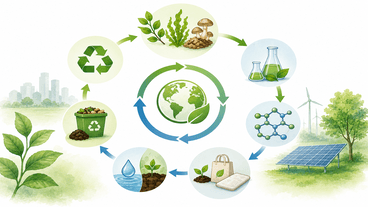
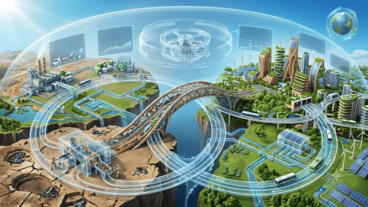
Circular Economy
Why the Circular Economy Matters Now
- Geoeconomic Strategy: In a fragmented global market, "resource sovereignty" is critical. Countries are using circularity to reduce dependence on volatile imports of raw materials like lithium and cobalt.
- Regulatory Mandates: The EU Circular Economy Act (expected late 2026) and similar global policies make "Extended Producer Responsibility" (EPR) a legal requirement, meaning companies are now financially responsible for their products' end-of-life.
- Value Recovery: For every €3 of economic value created globally, €1 is currently lost to inefficiencies. Circularity is the primary tool to recapture this "Value Gap."
Global Urgency & Research Gaps
- Despite the momentum, the global circularity rate fell to 6.9% recently. This highlights a widening gap between climate goals and actual material use.
- Research Gap - Molecular Recycling: While mechanical recycling (melting) is common, it degrades plastic. Scientists are racing to scale Chemical Recycling to break materials down to their molecular building blocks without losingq uality.
- Research Gap - Bio-benign Design: We lack high-performance materials that can safely return to the soil without leaving microplastics or toxic residues.
- Data Fragmentation: There is a lack of standardized data sharing between manufacturers and recyclers, which prevents efficient material recovery.
Real-World Impact
- Job Creation: The transition is projected to generate 7–8 million new jobs globally by 2030, specifically in repair, refurbishment, and "reverse logistics."
- Industrial Symbiosis: In places like Denmark, "Eco-industrial Parks" allow companies to trade waste—one factory's excess heat or steam becomes the neighbour’s energy source, cutting CO2 by thousands of tonnes annually.
- Electronics Lifespan: Design standards are successfully extending the life of consumer tech, with a 25% increase in the average lifespan of smartphones in regions with "Right to Repair" laws.
Challenges Scientists are Solving
- The "Material Soup" Problem: Modern products use complex blends of materials (like glued-together electronics). Scientists are developing reversible adhesives that "un-zip" when exposed to specific UV light or heat.
- Hard-to-Recycle Textiles: Currently, less than 1% of textiles are recycled back into clothing. Researchers are creating enzymes that can "eat" cotton-polyester blends and separate the fibers.
- Energy Balance: Ensuring that the energy used to recover a material doesn't outweigh the carbon saved by not mining it from the Earth
Emerging Technologies & Methods
- Digital Product Passports (DPP): Operating as a digital twin accessible via QR codes or RFID, these passports track a product’s entire lifecycle—from material origin to repair history. Notably, these become mandatory in the EU starting July 2026 to ensure transparency and ease of disassembly.
- AI-Powered Sorting: High-precision robotic arms now utilize computer vision to identify and categorize complex waste streams. This technology has reached a milestone of 99% accuracy, significantly reducing contamination in recycled materials.
- Product-as-a-Service (PaaS): This business model shifts the focus from "ownership" to "utility." By leasing services (such as "light") rather than selling hardware (like "bulbs"), manufacturers are financially incentivized to create durable, long-lasting products.
- Blockchain Traceability: To combat "greenwashing," blockchain creates an immutable chain of custody. This provides definitive proof that materials are genuinely recycled, allowing brands to verify their sustainability claims to consumers and regulators.
- Modular Design: This engineering approach builds products in "blocks" or interchangeable units. By allowing individual components to be upgraded or repaired independently, companies can prevent the disposal of entire units when only one part fails.
Circular Design
Why Circular Design Matters Now
The shift from a "take-make-waste" linear model to a circular one is driven by three urgent factors:
- Economic Value Loss: Global research indicates that the linear economy loses approximately €25.4 trillion (about 31% of global GDP) annually through inefficiencies like premature product disposal and energy waste.
- Resource Sovereignty: In a volatile geopolitical landscape, relying on virgin raw materials is a strategic risk. Circularity allows regions to build "strategic autonomy" by reusing materials already within their borders.
- The 2030 Deadline: Many global climate targets are tethered to 2030. Since over 80% of a product's environmental impact is determined at the design phase, circular design is the primary lever to meet these goals.
Global Urgency & Research Gaps
- Despite the momentum, a significant "Circularity Gap" remains. As of 2026, global circularity has hovered around 7%, meaning the vast majority of materials are still extracted fresh from the earth.
Key Research Gaps include:
- Scalability of "Bio-benign" Materials: We lack high-performance materials that can be safely composted at an industrial scale without contaminating food systems.
- Standardized Metrics: There is a gap in how companies report "circularity" compared to "carbon footprints." The Global Circularity Protocol (GCP) is currently being tested to fill this void.
- The "Rebound Effect": Scientists are still researching whether circular models (like rental) actually lead to lower overall consumption or if they simply encourage more frequent use.
Real-World Impact: 2026 Status
- Jobs: The transition is projected to create 7–8 million new jobs globally by 2030, specifically in repair, refurbishment, and environmental design.
- Waste Reduction: Implementation of Deposit Return Systems (DRS) in Europe has achieved collection rates of 90% for plastic bottles within just two years of launch.
- Industrial Competitiveness: 70% of manufacturing executives now expect circular solutions to be their primary revenue drivers by 2027.
Challenges Scientists are Solving
- Triggered Obsolescence: Moving away from "planned" obsolescence toward materials that degrade on command when exposed to a specific trigger (like a certain UV light or enzyme).
- Molecular Recycling: Breaking complex, multi-layer plastics down to their original monomers so they can be recycled infinitely without losing quality.
- Facile Disassembly: Engineering "smart" adhesives and fasteners that hold strong during use but "un-zip" easily when the product reaches a recycling facility.
Emerging Technologies & Methods
- Internet of Waste (IoW): This method utilizes smart bins and sensors to monitor waste levels in real-time. By providing data-driven insights, it allows for the optimization of collection routes, which effectively reduces transport-related emissions by 35%.
Circular Policies
Why Circular Policy Matters Now
The urgency is driven by a shift from "sustainability" to "strategic autonomy."
- Economic Productivity: Circular policies act as a productivity lever, helping regions extract more value from the same materials while reducing exposure to global supply shocks.
- The Regulatory "Floor": In 2026, we are seeing the "reporting ceiling" rise while the "regulatory floor" drops. Voluntary standards are being replaced by laws like the EU Circular Economy Act, which establishes a single market for secondary (recycled) raw materials.
- Measuring Value over Volume: Policies are shifting metrics from "tonnes collected" to "service intensity" how much value a product provides over its entire lifetime.
Global Urgency & Research Gaps
- Research Gap—Standardized Metrics: There is a lack of interoperable data standards. Scientists are racing to create the Global Circularity Protocol (GCP) to ensure that a "recycled" claim in one country matches the technical reality in another.
- Research Gap—Social Equity: Current policies often focus on the Global North. There is an urgent need for research into how circular policies affect labour rights and the "informal" waste sector in developing economies.
Real-World Impact (2026 Status)
- Deposit Return Systems (DRS): Over 50 countries have now launched DRS. In Europe, 19 countries (including recent additions like Poland and Austria) are seeing collection rates hit 90% within two years of implementation.
- The "Right to Repair": Policies have led to a 25% increase in the lifespan of consumer electronics by forcing manufacturers to provide spare parts and repair manuals.
- Reduced Virgin Plastic: Major multinationals (like Unilever) report an 18-20% reduction in virgin plastic use directly due to "Extended Producer Responsibility" (EPR) fees.
Challenges Scientists are Solving
- Toxic Legacies: Identifying and removing "forever chemicals" (PFAS) from recycled streams so that secondary materials meet the strict safety standards of new circular laws.
Emerging Technologies & Methods
- Digital Product Passports (DPP) & EU Registry: As of July 2026, Digital Product Passports are the cornerstone of the Eco-design for Sustainable Products Regulation (ESPR).
- The Policy: Governments now mandate a "digital twin" for products (starting with batteries, electronics, and textiles) to ensure transparency.
- The Tech: A central EU registry tracks material composition, durability data, and repair instructions accessible via QR/RFID, preventing information silos between manufacturers and recyclers.
- AI-Driven Material Synthesis & Sorting: AI has evolved from simple sorting to "Inverse Design" for materials.
- Novel Materials: AI platforms (like CuspAI) now act as search engines for molecules, allowing policymakers to encourage the development of "biodegradable by design" materials that meet specific stability requirements.
- Automated Food Safety: In food policy, AI-driven grading (e.g., LUCAi™) detects contaminants with near-lab accuracy, reducing food loss across the supply chain and supporting waste reduction targets.
- Blockchain for "Chain of Custody": Blockchain provides the verification layer for new reporting mandates like the Corporate Sustainability Reporting Directive (CSRD).
- Eliminating Greenwashing: Policies now require immutable proof of "secondary material" content. Blockchain ensures that a material claimed as "recycled" is not virgin material, creating a trustworthy market for secondary raw materials.
- Resource Accounting: Governments are using blockchain to integrate circularity KPIs into national financial reporting.
- Advanced Deposit Return Systems (DRS): DRS technology has become mainstream across Europe and parts of Asia (e.g., India's e-waste campaigns).
- Reverse Vending Machines (RVM): Modern RVMs use advanced sensors to identify packaging types and materials instantly, providing financial rewards to consumers and achieving collection rates of up to 90% within two years of implementation.
- Data Integration: These systems now feed real-time collection data directly into national waste management databases to track progress against circularity targets.
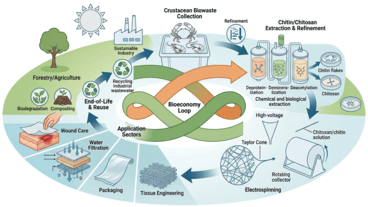
- Circular Bioeconomy & Biotechnology: Policy is shifting toward biotechnology to redefine "waste."
- Slag & Biofuels: Emerging biotech processes convert industrial by-products (like steel slag or used cooking oil) into commercially viable industrial materials or biofuels.
- Regenerative Systems: Policy support for startups in this space is turning waste management from a cost center into a revenue generator, as seen in recent Indian science and technology initiatives.
Circular Bioeconomy
WhyCircular Bioeconomy Matters Now
- Decarbonization: To meet net-zero targets, industries must replace fossil-based carbon (oil and gas) with "green carbon" derived from biomass.
- Resilience: Global supply chains for synthetic materials have become unstable. A bio-based economy allows regions to grow their own raw materials, such as bioplastics and bio-chemicals, locally.
- Regenerative Goals: Unlike traditional agriculture, which often depletes the earth, a circular bioeconomy aims to restore soil health and biodiversity while meeting human needs.
Global Urgency & Research Gaps
- The "Food vs. Fuel" Conflict: A major research gap exists in creating a bioeconomy that doesn't compete with food production. We need to move from "First Generation" feedstocks (like corn) to "Second and Third Generation" (like agricultural waste and algae).
- Standardization: There is a lack of global standards for "biodegradability." Research is needed to ensure that bio-based products actually break down in natural environments, not just in industrial composters.
- Scalability: While many bio-based solutions work in a lab, scaling them to replace the massive volumes of the global petrochemical industry remains a significant hurdle.
Real-World Impact
- Fashion: Brands are now mass-producing "leather" made from mycelium (mushroom roots) and fabrics from orange peels or pineapple leaves, reducing water use by up to 90% compared to traditional leather.
- Construction: "Cross-Laminated Timber" (CLT) and hempcrete are being used to build carbon-negative skyscrapers, turning cities into massive carbon sinks.
- Packaging: Seaweed-based coatings are replacing plastic films on food products, providing a material that is not only home-compostable but sometimes even edible.
Challenges Scientists are Solving
- Lignin Valorization: Lignin is a tough, woody part of plants often burned as waste. Scientists are developing enzymes to break it down into high-value aromatic chemicals for perfumes, plastics, and medicine.
- Microbiome Engineering: Researching how to "program" soil microbes to speed up the composting of bioplastics or to capture more carbon from the atmosphere.
- Waste Cascading: Designing systems where "waste" from one process becomes the "nutrient" for another—for example, using wastewater from food processing to grow nutrient-rich algae.
Emerging Technologies & Methods
- Precision Fermentation: This method uses "programmed" yeast or bacteria to "brew" specific proteins, fats, or complex materials. It allows for the production of items like spider silk or milk proteins in a lab setting, entirely bypassing the need for animal farming.
- Biorefineries: These facilities function similarly to oil refineries but process organic biomass instead of fossil fuels. Through a "cascading" process, they separate agricultural or wood waste into fibers, sugars, and chemicals for industrial use.
- Mycelium Fabrication: This involves growing mushroom root structures inside customized molds. As the mycelium grows, it takes the shape of the mold, creating sturdy, biodegradable products ranging from protective packaging and furniture to construction bricks.
- CO2-to-Protein: Using specific microbes that "eat" captured carbon dioxide, this technology converts greenhouse gases into high-quality protein. This protein can be used for fish feed or human consumption, significantly reducing the need for agricultural land.
- Algae Farming: This method cultivates micro-algae, which grow up to ten times faster than land-based plants. The harvested algae are then processed to produce sustainable biofuels, fertilizers, and biodegradable plastics.
Dematerialization
Dematerialization is the ability to produce the same (or better) quality of life while using fewer physical resources like minerals, fuels, and biomass.
WhyDematerializationMatters Now
- We have entered an era of "Peak Stuff." For decades, economic growth was strictly tethered to increased resource consumption. As global populations rise and the climate crisis intensifies, we can no longer afford that linear relationship. Dematerialization is the primary mechanism for decoupling allowing the economy to grow while environmental pressure shrinks.
Global Urgency & Research Gaps
- While some developed nations have achieved "relative dematerialization," global material extraction has tripled since 1970 and is projected to double again by 2060.
- The "Rebound Effect" Gap: A major research hurdle is the Jevons Paradox—where increasing the efficiency of a resource actually leads to more of it being used because it becomes cheaper. Scientists are struggling to find policy frameworks that prevent efficiency gains from being "eaten" by increased consumption.
- Data Blind Spots: We lack granular, real-time data on material flows in developing economies, making it difficult to implement global circularity standards.
Real-World Impact
- Digital Substitution: The smartphone is the ultimate dematerializer. It replaced cameras, GPS units, calculators, record players, and maps—all of which required separate plastic, metal, and glass components to manufacture.
- Weight Reduction: Modern aluminium cans are roughly 30% lighter than they were 30 years ago, saving millions of tons of metal and fuel in transport annually.
- The "Product-as-a-Service" Model: Instead of owning a car or a drill, users access the service (mobility or a hole in the wall), leading to higher utilization rates of fewer physical objects.
Challenges Scientists are Solving
- Material Substitution: Finding abundant, low-impact materials to replace rare earth elements (e.g., cobalt-free batteries).
- Structural Optimization: How can we build skyscrapers with 40% less steel without compromising safety?
- Miniaturization Limits: As chips get smaller, heat dissipation and quantum effects become massive engineering roadblocks.
- End-of-Life Recovery: Designing products so that "dematerializing" them at the end of their life (recycling) is energetically cheap.
Emerging Technologies & Methods
- Generative Design & AI: Engineers use AI to "grow" parts. By inputting weight and strength requirements, AI creates organic, lattice-like structures that use the absolute minimum amount of material necessary.
- Additive Manufacturing (3D Printing): Traditional manufacturing is "subtractive" (cutting away waste). 3D printing is "additive," placing material only where it is needed, which can reduce waste by up to 90%.
- Nanotechnology: Engineering materials at the molecular level allows for the creation of ultra-strong, ultra-light carbon nanotubes that could replace heavy steel cables or beams.
- Digital Twins: Using virtual replicas of cities or factories to simulate efficiency before a single physical brick is laid, preventing over-specification and resource waste.
Climate Finance
Why Climate Finance Matters Now
- For decades, the transition to a circular economy was seen primarily as a waste management or engineering challenge. Today, it is recognized as a financial imperative.
- The Global Value Gap: As of 2026, the global economy is still only 6.9% circular. We lose an estimated €25.4 trillion annually roughly 31% of global GDP—to linear "take-make-waste" practices.
- Emissions Nexus: Nearly 45% of global GHG emissions come from the way we make and use products, grow food, and manage land. We cannot reach "Net Zero" by 2050 through renewable energy alone; we must finance the circular transformation of the industrial sector.
Global Urgency & Research Gaps
- The "Circularity Gap" is widening even as recycling rates increase, creating a paradox that requires urgent financial intervention.
- The Funding Mismatch: While sustainable finance is at an all-time high, high-impact circular solutions (like textile-to-textile recycling or heavy industry material reuse) remain chronically underfunded compared to clean energy.
Research Gaps:
- Circular Risk Assessment: There is a lack of standardized metrics to help banks value "circular assets" versus traditional "linear assets."
- The Rebound Effect: Scientists are still investigating how to finance efficiency gains without accidentally driving up total resource consumption (Jevons Paradox).
- Informal Sector Integration: A significant gap exists in how global climate finance reaches the informal waste workers who currently perform the majority of recycling in the Global South.
Real-World Impact
- Climate finance is moving from abstract carbon credits to tangible infrastructure:
- De-risking Investments: Companies with high "circularity scores" have been shown to have lower default risks on debt and higher risk-adjusted stock returns, making them safer bets for institutional investors.
- Material Efficiency: Financing targeted at just five key areas cement, aluminium, steel, plastics, and food can eliminate 9.3 billion tonnes of CO2e by 2050, equivalent to cutting all global transport emissions to zero.
- Municipal Transformation: Cities are using "Green Bonds" to fund centralized anaerobic digestion plants and automated sorting facilities that divert organic waste from landfills, directly reducing methane emissions a gas with 80 times the warming power of CO2 over 20 years.
Challenges Scientists are Solving
- Bridging the gap between a bank's ledger and a recycling facility's floor requires solving several complex problems:
- Standardization of Taxonomies: Scientists and economists are working to harmonize over 50 different "Green Taxonomies" globally so that a "circular project" in Vietnam meets the same investment criteria as one in the EU.
- LCA (Life Cycle Assessment) Integration: Developing real-time tools that allow investors to see the immediate carbon-reduction impact of a recycled material versus a virgin one.
- The "Just Transition": Ensuring that "Techno-centric" solutions (like waste-to-energy plants) don't displace local communities or create secondary pollution (e.g., dioxins from incineration).
Emerging Technologies & Methods
- Blended Finance: Combining public development funds with private capital to "de-risk" waste management projects in emerging markets, particularly in Africa and Southeast Asia.
- Plastic Credits & Bonds: Much like carbon credits, these allow companies to fund the removal of a specific tonnage of plastic from the environment to offset their own packaging footprint.
- EPR (Extended Producer Responsibility) Schemes: New digital tracking methods (Blockchain) ensure that producers pay into a fund that directly finances the end-of-life treatment of their specific products.
- Resilience Bonds: A new financial tool that focuses on funding waste infrastructure that can survive extreme weather events, ensuring that recycling systems don't fail during climate disasters.
ESG Strategies
Why ESG Strategies Matter Now
In 2026, ESG has evolved from a "nice-to-have" reporting exercise into a license to operate.
- From Disclosure to Delivery: New global mandates, such as the EU’s Corporate Sustainability Reporting Directive (CSRD) and the Circular Economy Act, now require companies to provide audited evidence of their resource efficiency, not just vague goals.
- The Materiality of Waste: Waste is no longer viewed as an externality but as a governance failure and a financial risk. Effective ESG strategies allow firms to treat waste as a "stranded asset" that can be recovered and reinvested into the supply chain.
- Investor Pressure: Trillions in capital are now tied to ESG performance. For the waste management sector, this means easier access to "Green Bonds" for companies that demonstrate high circularity and ethical labour practices.
Global Urgency & Research Gaps
- The "Circularity Gap": Global circularity is still hovering below 10%. ESG strategies are urgently needed to bridge the gap between "downcycling" (low-value recycling) and "true circularity" (refurbishment and closed-loop systems).
Research Gaps:
- Scope 3 Measurement: Scientists struggle with accurately measuring "Scope 3" emissions—the indirect waste and emissions generated deep within a global supply chain.
- Social Pillar Neglect: Historically, ESG has focused heavily on the "E" (Environmental). There is a critical research gap in how circular economies impact the "S" (Social)—specifically the health and livelihoods of informal waste workers in the Global South.
- Standardization: There is no single, unified global metric for a "Circular ESG Score," leading to confusion for international investors.
Real-World Impact
- ESG strategies are fundamentally reshaping the industrial landscape:
- Regulatory Compliance: Companies are redesigning packaging to meet the EU Packaging and Packaging Waste Regulation (PPWR), which mandates specific recycled content by 2030 a move driven by ESG governance.
- Brand Value and Retention: 73% of global consumers now state they will change their habits to reduce environmental impact. ESG-compliant companies are seeing higher customer loyalty and lower employee turnover.
- Operational Resilience: Companies with robust ESG strategies were better able to navigate the resource scarcities of the mid-2020s by having "reverse logistics" systems already in place to reclaim materials from their own products.
Challenges Scientists are Solving
- Data Credibility & "Greenwashing": How do we move from self-reported data to verifiable, automated data? Scientists are developing blockchain-based "Digital Product Passports" to track a material's ESG footprint from extraction to disposal.
- Double Materiality: Developing frameworks that measure not just how the environment affects a company’s bottom line, but how the company’s waste affects the environment and local communities simultaneously.
- Chemical Complexity: Identifying and removing "forever chemicals" (like PFAS) from recycling streams to ensure that "circular" products aren't just recirculating toxins.
Emerging Technologies & Methods
- AI-Augmented ESG Monitoring: Artificial Intelligence is now used to analyze satellite imagery and sensor data to provide real-time reporting on landfill methane leaks or supply chain deforestation.
- Digital Product Passports (DPP): Every product carries a digital "ID" (QR code or RFID) that tells recyclers exactly what materials it contains, facilitating high-value recovery and satisfying ESG transparency requirements.
- Impact Valuation Accounting: Moving beyond simple carbon counting to "Full Cost Accounting," where the price of a product includes its projected social and environmental cleanup costs.
- Circular Credit Markets: Much like carbon credits, "Plastic Credits" are emerging as a way for companies to fund waste collection infrastructure in underserved regions to balance their ESG scorecards.
Green Economy
Why Green Economy Matters Now
The "Green Economy" is no longer a niche environmental concept; in 2026, it is the blueprint for industrial resilience and strategic autonomy.
- Economic De-risking: Recent geopolitical volatility and supply chain disruptions have exposed the extreme vulnerability of "linear" dependencies. A Green Economy prioritizes local, secondary material loops, shielding nations from global resource price shocks.
- The Valuation Pivot: As of 2026, roughly 31% of global GDP (€25.4 trillion) is lost annually due to wasteful linear practices. Transitioning to a green model is the only way to recover this "eroded value" and convert it into new growth sectors.
- Decoupling Growth from Extraction: With Earth Overshoot Day moving earlier each decade, the Green Economy provides the tools to grow prosperity without a corresponding increase in raw material consumption.
Global Urgency & Research Gaps
- The Global Circularity Gap: Current reports show global circularity has dipped to roughly 6.9%. This indicates that the "Green Economy" is growing slower than the "Linear Economy" it aims to replace.
Research Gaps:
- Net-Zero Algorithmic Costs: A significant new research gap is the carbon footprint of "Green AI." We need more data on whether the energy used by AI to optimize waste systems outweighs the environmental savings.
- Incentive Misalignment: There is a gap in understanding how to transition from consumption-based tax models (like VAT) to models that reward product longevity and repair.
- Secondary Market Liquidity: Research is needed to create "Interoperable Standards" for recycled materials so they can be traded as reliably as virgin commodities.
Real-World Impact
- The Circular Economy Act (2026): Major regions (like the EU) are passing landmark acts to establish a Single Market for secondary raw materials, making it legally and financially easier to use recycled steel or plastic than virgin materials.
- Job Creation: The International Labor Organization (ILO) estimates that the transition to a green, circular economy will generate 7–8 million new jobs globally by 2030, specifically in repair, refurbishment, and waste valorization.
- Waste-to-Wealth: Municipalities are shifting from "waste management" to "resource recovery," treating landfills as "urban mines" for precious metals and organic carbon.
Challenges Scientists are Solving
- Chemical Recycling & Upcycling: Moving beyond "downcycling" (where plastic becomes lower-quality park benches) to "molecular recycling," where waste is broken down into its original building blocks to create "virgin-quality" materials.
- Harmonizing Life Cycle Assessments (LCA): Developing real-time, automated LCA tools so that the environmental "price tag" of a product is as visible and accurate as its monetary price.
- The "Rebound Effect": Finding ways to ensure that as products become more efficient and cheaper to produce (Green Tech), we don't simply end up consuming more of them.
Emerging Technologies & Methods
- Green AI & Predictive Modeling: Using "Green AI" to predict material failures before they happen, extending the life of infrastructure and machinery through "Proactive Maintenance."
- Digital Product Passports (DPP): Blockchain-backed IDs for every physical product, allowing every actor in the value chain to see its chemical composition, repair history, and recycling instructions.
- Biological Valorization: New methods to convert organic waste into high-value products like aviation fuel, bioplastics, and protein for animal feed using specialized microbial "factories."
- Blended Climate Finance: Innovative funding models that combine public grants with private equity to fund the "first-of-a-kind" industrial-scale recycling plants that are too risky for traditional banks.
Sustainable Business Models
Why Sustainable Business Models Matter Now
In 2026, the transition from "Linear" to "Sustainable" is no longer a corporate social responsibility (CSR) goal—it is a survival strategy.
- Strategic Autonomy: Geopolitical fragmentation and commodity price volatility have made reliance on primary resource extraction a strategic risk. SBMs emphasize secondary material use to provide resource security.
- The €25 Trillion Opportunity: Estimates show that the global economy loses over €25.4 trillion annually due to waste. SBMs allow companies to recover this value by keeping materials in play longer.
- Regulatory Compliance: New mandates, such as the EU’s Circular Economy Act (2026) and China's 15th Five-Year Plan, now legally require businesses to demonstrate material efficiency and product longevity.
Global Urgency & Research Gaps
Research Gaps:
- The Scalability Paradox: Scientists are still researching how to scale niche circular models (like localized repair) to global industrial levels without increasing carbon footprints through logistics.
- Behavioral Economics: There is a significant gap in understanding how to shift consumer preference from "Ownership" to "Access" (e.g., why people still prefer buying cars over mobility subscriptions).
- Scope 3 Data: Accurate real-time measurement of indirect emissions and waste across complex, global supply chains remains a "holy grail" for researchers.
Real-World Impact
- Product-as-a-Service (PaaS): Companies like Signify (lighting) and Rolls-Royce (jet engines) no longer just sell hardware; they sell "illumination hours" or "thrust," incentivizing them to build products that last forever rather than break quickly.
- Reverse Logistics: Retailers are now building "take-back" infrastructures. By 2026, major fashion and tech brands have launched internal secondary markets, selling their own refurbished goods alongside new ones.
- Vertical Farming: Urban centers are using SBMs to reduce "food miles" by 90%, using hydroponic systems that recirculate 98% of their water, demonstrating how localized production can be both sustainable and profitable.
Challenges Scientists are Solving
- Chemical Upcycling: Scientists are perfecting methods to break down mixed-waste plastics into "virgin-quality" polymers, ensuring that recycled materials are not "downcycled" into lower-value products.
- Digital Product Passports (DPP): Developing the "DNA" for products—QR codes or RFID tags that store every piece of data about a product's material composition to facilitate easy recycling.
- Modular Engineering: Designing complex electronics (like smartphones) to be easily disassembled by robots, making "urban mining" for rare earth minerals economically viable.
Emerging Technologies & Methods
- Generative AI for Design: AI is now used to "grow" parts, creating organic, lattice-like structures that use 30-50% less material while maintaining the same strength.
- Blockchain-Backed Transparency: Used to track the "ethical footprint" of raw materials, ensuring that "green" claims are verifiable and not just greenwashing.
- Internet of Things (IoT) Monitoring: Sensors in products alert manufacturers when a part is about to fail, enabling "Predictive Maintenance" that extends a machine's life by years.
- 3D Additive Manufacturing: Moving from subtractive manufacturing (cutting away waste) to additive, which places material only where needed, reducing manufacturing waste by up to 90%.
Green Supply Chains
Why Green Supply Chains Matters Now
In 2026, Green Supply Chain Management (GSCM) has shifted from a "corporate social responsibility" checkbox to a core operational requirement.
- The "Greenhushing" Pivot: After years of "greenwashing" (vague sustainability claims), 2026 marks the era of radical transparency. Global markets now demand verifiable data over marketing slogans.
- Regulatory Explosion: New mandates, particularly in the EU and North America, now require Digital Product Passports (DPP) and mandatory Scope 3 emission reporting, making it illegal to ignore the environmental footprint of one’s suppliers.
- Resource Volatility: Geopolitical conflicts and climate-induced disruptions have made virgin raw materials more expensive and harder to acquire, making "circular" supply chains (which reuse and recycle) the only way to ensure business continuity.
Global Urgency and Research Gaps
- The Urgency: The global green logistics market is projected to exceed $2.18 trillion by 2031. With only 35% of global operations currently having net-zero goals, there is a massive "compliance gap" that needs urgent attention.
Key Research Gaps:
- Multi-tier Visibility: Scientists are still struggling to map "Tier N" suppliers—the deep-level providers of raw materials who often operate in the shadows.
- Sustainability Maturity Metrics: There is no universal "Sustainability Maturity Index" yet to compare the performance of a small factory in Vietnam with a tech giant in Silicon Valley fairly.
- The Rebound Effect: Research is needed to ensure that "greening" one part of the chain doesn't inadvertently increase emissions elsewhere (e.g., more energy used for recycling than for extraction).
Real-World Impact
- Green supply chains are no longer theoretical; they are transforming industries today:
- Waste to Wealth: Companies are utilizing Reverse Logistics to turn end-of-life products back into raw materials, reducing landfill waste by up to 90% in specific electronics sectors.
- Carbon-Neutral Logistics: The adoption of self-driving electric trucks and delivery drones for "last-mile" delivery is significantly lowering the carbon intensity of e-commerce.
- Consumer Influence: Approximately 85% of consumers now report that sustainable packaging actively influences their purchasing decisions, forcing a massive shift in the retail sector.
Challenges Scientists are Solving
- The Trade-off Dilemma: Using Multi-Criteria Decision-Making (MCDM) and Fuzzy Logic to balance environmental protection with financial viability.
- Data Silos: Developing interoperable platforms so that data from a shipping vessel can "talk" to the software of a recycling plant.
- Bio-Material Performance: Engineering sustainable alternatives like Mycelium (mushroom) packaging and seaweed films that match the durability and shelf-life of traditional plastics.
Emerging Technologies & Methods
- Digital Twins: Creating virtual replicas of entire supply networks to simulate "what-if" scenarios for carbon reduction without risking actual operations.
- Blockchain for Traceability: Using immutable ledgers to track the "Chain of Custody" for conflict minerals and recycled materials.
- Industrial AI & Generative Design: AI is being used to design products that are inherently easier to disassemble (Design for Disassembly), ensuring that recycling is built into the product's DNA.
- Adaptive Automation: Robotic systems in warehouses that are now smart enough to sort mixed waste materials with 99% accuracy, fueling the circular economy.
Industrial Ecology
Why Industrial Ecology Matters Now
In 2026, Industrial Ecology has evolved from a theoretical framework to the "Operating System" of the Circular Economy. It no longer just studies "waste as a resource"; it treats the global industrial network as a living ecosystem where the survival of one firm depends on the metabolic output of another.
- The Decoupling Mandate: With global temperatures projected to reach 2.3°C above pre-industrial levels, IE is the primary method for decoupling economic growth from environmental destruction.
- Systems Over Silos: Traditional waste management looks at a single factory; Industrial Ecology looks at the Industrial Symbiosis of entire cities and regions.
- Supply Chain Sovereignty: Amidst 2026's geoeconomic fragmentation, IE allows nations to find "hidden" resources within their own borders by mining their own waste streams.
Global Urgency and Research Gaps
- The Urgency: Material production now accounts for approximately 23% of global greenhouse gas emissions. Transitioning to low-carbon energy infrastructure (dams, dikes, and turbines) requires a massive influx of minerals, creating a "Resource Paradox" that only IE can solve.
Key Research Gaps:
- The "Rebound Effect": Scientists are struggling to ensure that efficiency gains in one sector don't lead to increased consumption in another.
- Socio-Metabolic Inequality: There is a significant data gap in how industrial metabolism affects the Global South versus the North. Research is urgently needed on "Consumption Corridors" that define decent living standards within planetary boundaries.
- Data Integrity: Validating "circular" claims to prevent sophisticated new forms of greenwashing remains a top priority.
Real-World Impact
- Eco-Industrial Parks (EIPs): Sites like Kalundborg are being replicated globally, where waste heat from a power plant warms local fish farms, and gypsum from sulfur scrubbers becomes raw material for drywall factories.
- Urban Mining: Cities are now being viewed as "high-grade mines." In 2026, the recovery of rare earth elements from e-waste is becoming more cost-effective than traditional deep-earth mining.
- Reduced Industrial Mortality: By implementing "Clean Energy and Just Industrialization" pushes, IE is directly reducing the 13.5 million projected deaths linked to industrial pollution and climate change.
Challenges Scientists are Solving
- Thermodynamic Limits: Finding the "breaking point" of recycling—how many times can a material be reused before its quality degrades beyond utility?
- Complex Product Chemistry: Solving the "chemical soup" problem where modern products (like smartphones) contain over 60 different elements that are nearly impossible to separate cleanly.
- Dynamic Life Cycle Assessment (LCA): Moving from "static" snapshots of environmental impact to real-time, AI-driven LCAs that update as a product moves through the economy.
Emerging Technologies & Methods
- The field is currently being revolutionized by the convergence of Digitalization and Sustainability:
- Earth System Digital Twins: Continuously updating digital models of ecosystems that allow scientists to simulate the impact of a new industrial plant before a single brick is laid.
- Socio-Economic Metabolism (SEM): A research paradigm using Material Flow Analysis (MFA) to track the "weight" of society and identify where materials are getting "stuck" in the system.
- Green AI & Blockchain:Green AI: Energy-efficient algorithms designed to optimize resource allocation.
- Blockchain: Creating an immutable "Chain of Custody" for materials, ensuring that "recycled" steel is actually recycled.
- Industry 5.0 Integration: Using collaborative robots (cobots) designed specifically for Design for Disassembly, allowing machines to take products apart as easily as they put them together.
Industrial Metabolism
Why Industrial Metabolism Matters Now
In 2026, we have reached "Peak Extraction" for several critical minerals. Industrial Metabolism has moved from an academic exercise to a Geopolitical Survival Strategy.
- Resource Sovereignty: Nations are using IM to map their "stocks and flows," identifying exactly how much lithium, cobalt, and copper is currently "stored" in their infrastructure and waste, rather than relying on volatile foreign imports.
- The Carbon Budgeting Era: As global carbon taxes become standardized, understanding the exact carbon "metabolism" of a product from extraction to its eventual "death" is the only way for companies to remain profitable.
- From Linear to Closed-Loop: IM provides the precise "blood tests" needed to diagnose where a circular economy is leaking materials into the environment as pollution.
Global Urgency and Research Gaps
- The Urgency: The Global Risks Report 2026 ranks "Natural Resource Shortages" among the top risks of the decade. We are consuming resources faster than the "industrial stomach" can digest and redistribute them.
Key Research Gaps:
- The "Black Box" of Chemical Transformation: While we can track where a material goes, we still struggle to track how it changes chemically during industrial processing, leading to unintended toxic by-products.
- In-Use Stocks Data: We have good data on what we produce, but a massive gap exists in knowing exactly how much material is currently "trapped" in standing buildings and discarded electronics (the "urban stock").
- Cross-Scale Validation: Bridging the gap between the metabolism of a single factory and the metabolism of a global trade network.
Real-World Impact
- Urban Mining Optimization: In 2026, major cities like Tokyo and Amsterdam are using IM maps to time their infrastructure upgrades, harvesting high-grade metals from old bridges and buildings just as they reach the end of their life.
- Precision Recycling: By understanding the "metabolic profile" of plastic waste, companies are now able to match specific waste streams to the exact chemical recycling process needed, increasing yield by 40%.
- Policy-Driven Metabolic Rates: New "Material Efficiency" laws in 2026 mandate that products must have a documented "Metabolic Passport," showing they can be 100% absorbed back into the industrial system.
Challenges Scientists are Solving
- Deciphering the "Emiss-ome": Scientists are working to link source chemicals to terminal pollutants. Current industrial processes act like a "black box" where inputs go in and complex mixtures of pollutants come out; researchers are trying to map these internal reactions in real-time.
- Thermodynamic Degradation: Every time a material is "metabolized" (recycled), it loses quality. Scientists are trying to solve the "Entropy Wall" finding ways to upgrade the quality of recycled materials so they don't eventually become "industrial sludge."
- Dynamic Material Flow Analysis (dMFA): Moving away from static spreadsheets to living models that predict resource needs 10 years into the future based on current consumption rates.
Emerging Technologies & Methods
- Multi-Model Integration: Coupling molecular-scale chemical models with global process simulations to see how a change in a single molecule affects a global supply chain.
- AI-Enabled "Metabolic Sensing": Using IoT sensors and AI to monitor the flow of heat and chemicals in a factory, allowing the system to "self-correct" its metabolism for maximum efficiency.
- Acoustic Ejection Mass Spectrometry (MS): A breakthrough method (seeing massive growth in 2026) that allows for near-instant identification of metabolites and chemical signatures in waste streams, accelerating the sorting process.
- Digital Product Passports (DPP): A mandatory tech-standard in 2026 that acts like a "nutritional label" for industrial products, telling recyclers exactly what is inside and how to "digest" it.
Product Stewardship
Why Product Stewardship Matters Now
In 2026, Product Stewardship has transitioned from a voluntary "take-back" program to a mandatory lifecycle governance model.
- Regulatory Shift: Governments are moving beyond simple waste management to "Right to Repair" laws and the EU's Packaging and Packaging Waste Regulation (PPWR), which reached full enforcement in August 2026.
- The Value Gap: Recent 2026 research identifies a €10 trillion "Value Gap" in end-of-life waste. Product stewardship is the primary mechanism used to capture this lost economic value.
- Brand Accountability: Consumers now expect "Cradle-to-Cradle" responsibility. Stewardship is no longer just about disposal; it’s about ensuring a product never becomes waste in the first place.
Global Urgency and Research Gaps
- The Urgency: Only about 6.9% of global materials are currently secondary (recycled) raw materials. With raw material extraction costs soaring, the urgency to reclaim products at their end-of-life is a matter of economic security.
Key Research Gaps:
- The "Composition Trap": Scientists are struggling with "multi-material" products—packaging or electronics where incompatible layers are fused together, making stewardship-based recovery nearly impossible.
- Consumer Friction: There is a major gap in behavioral research on how to effectively incentivize the return of products. (e.g., How do we get 99% of batteries back from households?)
- Tier-N Transparency: Mapping the full environmental impact of components sourced from deep, multi-tier supply chains remains a massive data challenge.
Real-World Impact
Product stewardship is actively reshaping how we consume:
- Light-as-a-Service (LaaS): Companies like Signify no longer just sell lightbulbs; they sell "illumination." They own the hardware, maintain it, and reclaim it for recycling, ensuring 100% material recovery.
- Deposit Schemes 2.0: Retailers like H&M and IKEA have scaled global deposit systems where customers receive digital tokens or discounts for returning old textiles and furniture, creating a closed-loop raw material stream.
- Mono-Material Revolution: To simplify stewardship, industries are stripping away complexity. In 2026, we see the rise of fully recyclable mono-material laminated bags that replace unrecyclable multi-layer plastics.
Challenges Scientists are Solving
- Chemical Substitution: Using AI to discover safer, "benign-by-design" chemical alternatives that don't contaminate the recycling stream.
- Design for Disassembly (DfD): Engineering products with "smart fasteners" that lose their grip when exposed to specific triggers (like a specific heat or vibration frequency), allowing robots to disassemble products in seconds.
- Closed-Loop Quality Control: Solving the "Entropy Problem"—how to process returned materials so they maintain the same structural integrity as virgin materials.
Emerging Technologies & Methods
- Digital Product Passports (DPP): A 2026 compliance standard. Every product carries a digital "ID" (via QR or NFC) that tells recyclers exactly what chemicals are inside and how to take it apart.
- Blockchain Traceability: Providing an "immutable ledger" that proves a product was responsibly reclaimed and recycled, preventing fraudulent "green" claims.
- Generative AI in R&D: AI is being used to design "circular molecules" and materials that are programmed to break down into harmless components at the end of their useful life.
- Robotic Sorting with Hyperspectral Imaging: Advanced sensors that can "see" the chemical composition of a product on a moving conveyor belt, allowing for surgical precision in waste sorting.
Repair, Reuse Circular Consumption
Why Repair, Reuse & Circular Consumption Matters Now
- The "Value Gap" Crisis: The Circularity Gap Report 2026 highlights a €25.4 trillion annual loss to the global economy due to linear "extract-produce-dispose" models—roughly 31% of global GDP.
- Regulatory "Right to Repair": 2026 marks a tipping point as the EU Circular Economy Act and similar global mandates (like China's 15th Five-Year Plan) make it illegal for manufacturers to prevent product repairs or use "planned obsolescence."
- Resource Security: In a fragmented global economy, "secondary materials" (those reclaimed through reuse and repair) have become a matter of national security and strategic autonomy.
Global Urgency and Research Gaps
- The Urgency: Humanity's demand for resources continues to exceed the Earth's regenerative capacity earlier each year (Earth Overshoot Day). Global circularity has stagnated near 7%, meaning 93% of materials are still wasted.
Critical Research Gaps:
- The "Convenience Paradox": Scientists are struggling to find ways to make "reuse" as frictionless as "disposable" consumption for the average consumer.
- Longevity Metrics: There is a lack of standardized scientific methods to measure the "Repairability Index" across different product categories (e.g., comparing a laptop's repairability to a pair of smart-shoes).
- Socio-Technical Barriers: Understanding why consumers still prefer "new" over "refurbished" despite the environmental benefits.
Real-World Impact
- Job Creation: The International Labor Organization (ILO) predicts that the transition to repair and refurbishment could generate 7–8 million new jobs globally by the end of the decade.
- Economic Resilience: Companies like IKEA and Patagonia have successfully scaled "Recommerce" platforms, where they buy back used goods, repair them, and resell them, creating a recurring revenue stream that is decoupled from raw material extraction.
- Carbon Decoupling: Extending the life of a smartphone by just two years through repair can reduce its lifetime carbon footprint by up to 30%.
Challenges Scientists are Solving
- Design for Disassembly (DfD): Engineering products with "smart adhesives" or fasteners that release when triggered by specific heat or light, allowing for non-destructive repair.
- Material Fatigue Science: Developing non-destructive testing (NDT) methods to determine exactly how much "life" is left in a component before it needs to be replaced.
- Chemical Safety in Reuse: Ensuring that legacy toxins in older products (like old plastics containing now-banned flame retardants) do not re-enter the circular economy.
Emerging Technologies & Methods
- Digital Product Passports (DPP): Every product in 2026 increasingly carries a digital twin a QR or NFC tag that provides repair manuals, spare part lists, and material composition to both consumers and professional repairers.
- AI-Driven Predictive Maintenance: Using IoT sensors to predict when a product will fail before it breaks, allowing for pre-emptive repair that extends asset life.
- 3D-Printed Spare Parts on Demand: Eliminating the need for massive warehouses of old parts by allowing local repair shops to "print" high-quality, manufacturer-certified spare parts locally.
- Blockchain for "Chain of Ownership": Providing a verifiable history of a product’s repair and maintenance, which increases the resale value and trust in "pre-loved" circular goods.
Reusable Packaging
Why Reusable Packaging Matters Now
- Regulatory Enforcement: 2026 is the "delivery year" for major policies like the EU Packaging and Packaging Waste Regulation (PPWR), which sets strict 2030 targets (e.g., 40% of transport packaging must be reusable).
- Economic Resilience: With the cost of virgin plastic and paper soaring due to resource scarcity, businesses are shifting to "Packaging as a Service" (PaaS) to decouple operational costs from raw material markets.
- Waste Prevention vs. Management: While recycling often results in "downcycling," reuse keeps the material's structural value intact, making it the most carbon-efficient strategy in the circular hierarchy.
Global Urgency and Research Gaps
- The Urgency: Despite decades of recycling, global plastic leakage remains critical. The Global Circularity Protocol (GCP), a new 2026 framework, highlights that reuse systems are the only way to meet the 90% collection targets mandated by many nations for 2029.
Key Research Gaps:
- Cross-Sector Hygiene Standards: There is a significant gap in global standardized protocols for "industrial cleanliness" to ensure reused food and medical packaging meet 100% safety standards every time.
- The "Net-Positive" Threshold: Research is needed to determine the exact "break-even point" (the number of reuse cycles) required for different materials to truly outperform single-use options in terms of carbon footprint.
- Reverse Logistics Optimization: Solving the "empty mile" problem how to return empty packaging without doubling transport emissions.
Real-World Impact
- Damage Reduction: New studies (e.g., Fraunhofer Institute, 2026) show that switching from single-use cardboard to reusable plastic crates (RPCs) reduces product damage in fresh food supply chains by up to 98%.
- Consumer Re-Commerce: Global brands like Starbucks and Coca-Cola have scaled "Smart-Cup" and "Refill-at-Home" programs, with some urban centers reporting a 30% reduction in single-use litter within just two years.
- Logistics Efficiency: Standardized, stackable crates in the automotive and grocery sectors have increased warehouse space utilization by 20%, reducing the need for new industrial footprint.
Challenges Scientists are Solving
- Material Fatigue & Longevity: Engineering "High-PCW" (Post-Consumer Waste) plastics that can survive hundreds of industrial wash cycles without degrading or leaching microplastics.
- Anti-Contamination Sensors: Developing food-safe inks and biosensors that change colour if a reusable container has been exposed to unauthorized chemicals or improper temperatures during its journey.
- Digital Integration: Scientists are integrating AI-pattern recognition to predict when a reusable asset is reaching its end-of-life and should be pulled for recycling before it fails.
Emerging Technologies & Methods
- Digital Product Passports (DPP) & rTurn: Utilizing NFC and QR-based tracking technology to handle the collection, washing, and sanitization of millions of assets in real-time.
- Active & Interactive Packaging: Reusable containers equipped with Smart Functional Indicators (like Senoptica’s oxygen sensors) that monitor product freshness in real-time.
- Shared Asset Pooling: A shift toward "full-service pooling," where companies like IFCO or Brambles manage the entire "Smart Cycle" of packaging, utilizing AI to optimize the distribution and return of crates.
- Design for Disassembly (DfD): Creating modular reusable containers where individual broken parts (latches, handles) can be swapped out easily, extending the container's life by years.
Eco-Industrial Parks
Why Eco-Industrial Parks Matter Now
- The Decoupling Imperative: With the 2030 Sustainable Development Goal deadlines approaching, EIPs are the primary vehicle for decoupling economic growth from resource consumption.
- Energy Symbiosis: In the 2026 energy landscape, industrial parks are no longer just consumers; they are "Energy Hubs" that share excess heat, green hydrogen, and renewable energy between neighbouring factories, reducing total park emissions by up to 45%.
- Resilience to Geopolitics: EIPs provide a buffer against global supply chain volatility. By treating "waste" from Factory A as "raw material" for Factory B within the same park, companies reduce their reliance on risky transcontinental shipping.
Global Urgency and Research Gaps
- The Urgency: Industrial pollution still contributes to a significant portion of the 13.5 million additional deaths projected from environmental damage by 2050. There is an urgent need to retro-fit traditional "brownfield" industrial zones into EIPs to meet 2026 climate targets.
Critical Research Gaps:
- The "Social Symbiosis" Gap: While technical exchanges (waste-to-energy) are well-mapped, there is a gap in understanding how to manage the social and organizational trust required for independent companies to share sensitive operational data.
- Small-Medium Enterprise (SME) Integration: Most EIP research focuses on giant "anchor" firms. Scientists are currently looking for ways to include smaller businesses that lack the capital for high-tech circular infrastructure.
- Inclusive Waste Metrics: Current metrics often miss the informal waste sector. Research is needed to integrate informal recyclers into the formal EIP ecosystem safely and fairly.
Real-World Impact
- UNIDO GEIPP Success: The Global Eco-Industrial Park Programme has reported annual savings of over 57 million kWh of energy and 2 million cubic meters of water across pilot sites in Vietnam, Egypt, and Colombia.
- Waste Diversion: In Vietnam's DEEP C zones, 2026 data shows that glass grinding powder once a landfill burden—is now used as a standard road construction filler, saving 3,000 metric tonnes of waste annually.
- Economic Competitiveness: Firms within EIPs report a 15–20% reduction in raw material costs, directly boosting their competitive advantage in the global market.
Challenges Scientists are Solving
- Optimization of Multi-Objective Models: Scientists are using advanced mathematics to balance the conflicting needs of multiple firms, ensuring that resource allocation is fair, profitable, and environmentally optimal.
- Agent-Based Modeling (ABM): Using AI "agents" to simulate how an EIP will behave over 20 years, helping planners predict where the system might fail if an anchor company leaves.
- Thermodynamic Matching: Matching the quality of waste (e.g., the exact temperature of waste steam) to the requirement of the next user, preventing "energy grade" loss.
Emerging Technologies & Methods
- Digital Twins for Symbiosis: Creating a 1:1 virtual replica of the park's metabolism to identify "hidden" symbiosis opportunities that humans might miss.
- AI Energy Demand Forecasting: 2026 research highlights the use of deep learning to predict when one factory will have excess energy so it can be automatically rerouted to a neighbour in real-time.
- Blockchain Resource Tracking: Using immutable ledgers to verify the "green" status of secondary materials as they move between firms, ensuring compliance with international circularity standards.
- Modular "Plug-and-Play" Symbiosis: Developing standardized chemical and thermal connectors that allow new companies to "plug in" to the park’s waste and energy grid with minimal infrastructure investment.
Digital Technologies for Waste Circular Systems
Why Digital Technologies for Waste & Circular Systems Matters Now
- The "Data-Driven" Compliance Era: With the full implementation of the EU’s Digital Product Passport (DPP) and California’s SB 54, companies can no longer rely on estimates. Digital verification of every material's "chain of custody" is now a legal requirement for market access.
- Economic Optimization: The digital circular economy market is projected to grow to $9.99 billion by 2029. In a high-inflation 2026, digital twins and AI are the only ways for firms to find the 10–15% efficiency gains needed to remain profitable.
- Resource Sovereignty: Amidst ongoing geopolitical shifts, digital mapping of "Urban Mines" (tracking materials embedded in city infrastructure) is now a national security priority for resource-scarce nations.
Global Urgency and Research Gaps
- The Urgency: Global circularity is currently struggling to surpass 7.2%. Digital technology is recognized as the only tool capable of handling the massive data complexity required to bridge the remaining 92.8% gap.
Critical Research Gaps:
- The Interoperability Crisis: There is no "universal language" for waste data. A sensor in a German recycling plant often cannot "talk" to a logistics software in Vietnam, creating massive data silos.
- The AI "Cultural Debt": As organizations rush to implement AI, research is lagging on how to maintain human accountability and trust when algorithms begin making autonomous "discard vs. keep" decisions.
- Data Veracity: Research is urgently needed on "Disinformation Security"—ensuring that the data fed into circular systems hasn't been "greenwashed" or tampered with by bad actors.
Real-World Impact
- AI-Sorted Purity: Sorting facilities (such as those using AMP’s Smart Sortation) have increased the purity of recycled plastic bales to over 99%, allowing them to be used in food-grade packaging for the first time.
- Dynamic Collection: Cities like Seoul and Amsterdam have replaced fixed trash pickup schedules with demand-driven routing. IoT fill-level sensors have reduced garbage truck emissions by 30% and operational costs by 25%.
- Reverse Logistics at Scale: E-commerce giants now use AI pattern recognition to predict return volumes, allowing them to pre-allocate warehouse space for "refurbishment" rather than shipping returns to landfills.
Challenges Scientists are Solving
- Inverse Design: Scientists are using Generative AI to work backward starting with a needed material property (e.g., "biodegradable but heat-resistant") and letting AI propose the optimal molecular structure.
- Techno-Economic Process Simulation: Researchers are developing real-time simulations that predict the industrial viability of a recycling route (chemical vs. mechanical) before a single gram of waste is processed.
- The "Shadow Waste" Problem: Using satellite imagery and computer vision to detect and track illegal open-air burning and ocean plastic leakage in real-time.
Emerging Technologies & Methods
- Agentic AI & The "Nervous System": The shift from "Passive AI" (tracking) to "Agentic AI" (taking action), where AI agents autonomously negotiate the sale of industrial by-products between different factories in an eco-park.
- Hyperspectral Imaging (HSI): Going beyond simple cameras, HSI allows robots to "see" the chemical composition of materials on a conveyor belt—distinguishing between different types of black plastics that were previously unrecyclable.
- Blockchain-Enabled Traceability: Creating immutable "Material Passports" that follow a product from the mine to the consumer and back to the recycler, ensuring "recycled content" claims are 100% verifiable.
- Digital Twins for Urban Mining: 3D digital models of cities that identify the exact location and volume of copper, steel, and aluminium currently "stored" in old buildings, allowing for surgical harvesting during demolition.
Smart Recycling Resource Recovery Technologies
Why Smart Recycling & Resource Recovery Technologies Matters Now
- The "Purity" Mandate: Global regulations, such as the EU's Packaging and Packaging Waste Regulation (PPWR), now demand near-perfect material purity. "Smart" tech is the only way to meet these 99%+ purity standards that manual sorting cannot achieve.
- Operational Survival: In 2026, labour shortages and rising energy costs have made traditional waste management financially unsustainable. "Smart" automation is no longer a luxury—it is a requirement for operational viability.
- Closing the 7% Gap: Current data shows only ~7.2% of the global economy is circular. Smart technologies provide the high-resolution data needed to bridge the remaining 93% gap.
Global Urgency and Research Gaps
- The Urgency: We are generating over 62 million tons of e-waste annually, yet recovery rates remain stagnant. Without smart intervention, we risk a "Resource Choke" where manufacturers cannot access the materials needed for the green energy transition (lithium, cobalt, copper).
Critical Research Gaps:
- The "Black Plastic" Problem: While AI is improving, identifying and sorting carbon-black plastics and complex multi-layered laminates at industrial speeds remains a major technical hurdle.
- Interoperable Data Standards: There is currently no "Global Language for Waste." A smart bin in London often cannot share data with a processing plant in Mumbai, creating massive data silos.
- Behavioural Feedback Loops: Research is needed on how to use smart-bin data to effectively change consumer behaviour in real-time.
Real-World Impact
- 98% Damage Reduction: In the food supply chain, switching to smart-tracked reusable crates has reduced product loss by nearly 98%, saving billions in organic waste.
- Dynamic Urban Logistics: Cities like Amsterdam and Seoul have replaced "fixed-day" pickup with demand-driven routing. IoT fill-sensors have cut truck emissions by 30% and fuel costs by 25%.
- High-Value Recovery: Modern Smart MRFs (Material Recovery Facilities) are now capable of recovering precious metals from e-waste with 60% higher efficiency than 2020 standards, turning waste streams into profitable "urban mines."
Challenges Scientists are Solving
- Chemical Fingerprinting: Using Hyperspectral Imaging (HSI) to "see" the chemical DNA of a material on a fast-moving conveyor belt, allowing for the separation of food-grade vs. non-food-grade plastics.
- Robotic De-Manufacturing: Developing "Soft Robotics" that can handle fragile electronics and disassemble them without damaging the hazardous batteries inside.
- Inverse Design AI: Using generative models to help manufacturers design products that are guaranteed to be recognized and sorted by smart recycling systems.
Emerging Technologies & Methods
- Swarm Sorting Robotics: Small fleets of autonomous robots (like the Antfarm Swarm Alpha) that "pick and place" specific materials into onboard bins, enabling 10x higher throughput than traditional arms.
- Digital Product Passports (DPP): Standardized QR/NFC tags that provide a product's entire "biography" to a recycling robot, detailing exactly how to disassemble and recycle it.
- AI "Automated Auditors": Computer vision systems at weighbridges that analyze a truck's load in milliseconds, instantly flagging contaminants and providing digital proof for regulatory compliance.
- Blockchain-Verified Traceability: Creating an unchangeable record of a material's journey, ensuring that "Recycled Content" labels on products are 100% truthful.
AI Data Analytics in Circular Economy
WhyAI & Data Analytics in Circular EconomyMatters Now
- The Complexity Barrier: The transition from a linear to a circular economy requires tracking billions of objects across fragmented global supply chains. AI is the only tool capable of processing this "big data" to synchronize product design, consumer use, and material recovery.
- Regulatory "Hard Enforcement": With 2026 marking the full activation of the EU's Digital Product Passport (DPP) and Scope 3 emissions reporting, companies must provide real-time, verifiable data on every material’s origin and circularity status to maintain market access.
- Economic Viability: In a landscape of labour shortages and high resource costs, AI-driven automation provides the 15–20% efficiency gains necessary to make recycling and repair more profitable than extraction.
Global Urgency and Research Gaps
- The Urgency: Global circularity has hovered around 7.2% for years. To hit the 2030 "Sustainable Development Goals," we must double this rate in the next four years. AI is recognized as the "primary accelerator" to bridge this gap.
Critical Research Gaps:
- The Global South Data Void: Most AI models are trained on data from advanced economies. There is an urgent need for research on "inclusive AI" that integrates the informal waste sectors and unique resource flows of emerging markets (ASEAN, BRICS).
- The AI Energy Paradox: Scientists are racing to solve the "rebound effect," where the high energy consumption of running massive AI models could potentially outweigh the carbon savings they generate in the circular economy.
- Multi-Tier Interoperability: Research is needed to create a "universal data language" so that a sensor in a factory can seamlessly communicate with a robotic sorter in a different country.
Real-World Impact
- 99%+ Sorting Purity: AI-powered computer vision (e.g., Greyparrot) now identifies and tracks thousands of objects per minute on conveyor belts, distinguishing between food-grade and non-food-grade plastics with higher accuracy than human sorters.
- 30–50% Collection Efficiency: Cities like Seoul and Amsterdam have fully transitioned to demand-driven waste routing. IoT sensors predict bin fill levels, allowing trucks to visit only what is necessary, drastically cutting fuel costs and CO2 emissions.
- Design Feedback Loops: For the first time, brands are receiving "recyclability reports" generated by AI at sorting plants, showing them exactly why their packaging failed to be recycled (e.g., due to a specific colour additive or label shape), allowing for instant design corrections.
Challenges Scientists are Solving
- "Inverse Design" for Circularity: Using Generative AI to work backward—starting with a needed material property (like "biodegradable but heat-resistant") and letting AI propose the optimal molecular structure for a 100% circular material.
- Predicting Material Fatigue: Developing AI models that can analyze industrial sensor data to predict exactly when a machine part will fail, enabling "proactive repair" and extending asset life by years.
- Mixed Waste Sorting (MWS): Scientists are perfecting AI algorithms that can recover high-quality materials from "residual" (black bag) waste, which was previously considered lost to landfills or incineration.
Emerging Technologies & Methods
- Agentic AI for Industrial Symbiosis: Autonomous AI agents that "negotiate" the sale of industrial by-products (like excess heat or chemical scrap) between neighbouring factories in real-time.
- Hyperspectral Imaging (HSI): Advanced sensors that "see" the chemical DNA of a material, allowing robots to sort complex composites and "black plastics" that were previously unidentifiable.
- Digital Twins of Urban Mines: 3D digital models of entire cities that track the volume of copper, steel, and aluminium embedded in buildings, allowing for "surgical harvesting" during future renovations.
- Blockchain-Verified Circularity: Using immutable ledgers to store the AI-generated data of a product’s lifecycle, ensuring "recycled content" claims are 100% transparent and fraud-proof.
Advanced Recycling
Why Advanced Recycling Matters Now
- Breaking the "Mechanical Ceiling": Conventional mechanical recycling (shredding and melting) can only process about 15–20% of plastic waste effectively. Advanced Recycling tackles the remaining 80%—including films, multi-layer pouches, and contaminated materials.
- The Virgin-Quality Requirement: In 2026, global brands (Nestlé, Unilever, etc.) face strict mandates to include 30–50% recycled content in their packaging. Advanced recycling is the only method that returns plastic to its original monomer form, ensuring it is safe for food and medical contact.
- Decarbonizing the Chemical Industry: By using waste as a feedstock (Circular Feedstock) instead of petroleum, the chemical industry is using Advanced Recycling to meet its Net-Zero 2050 interim targets.
Global Urgency and Research Gaps
- The Urgency: We are currently producing 400 million tonnes of plastic annually. Without advanced methods, the "plastic leakage" into oceans is projected to triple by 2040. There is a massive "infrastructure gap" between current pilot plants and the commercial scale needed to process global waste.
Critical Research Gaps:
- Life Cycle Assessment (LCA) Transparency: Scientists are still debating the exact carbon footprint of pyrolysis vs. gasification. Research is needed to prove these technologies are lower-carbon than virgin production.
- Catalyst Poisoning: Research into how to prevent trace contaminants (like chlorine or flame retardants) from ruining the expensive catalysts used in chemical recycling.
- Yield Optimization: Closing the gap between "input waste" and "usable oil/monomer" output, which currently sees significant loss during processing.
Real-World Impact
- Commercial Scale-Up: In 2026, the first "Mega-Recycling" plants (e.g., Mura Technology and Eastman’s new facilities) are processing 100,000+ tonnes of waste per year, proving the tech is bankable.
- Closed-Loop Textiles: Advanced recycling is now being used to break down blended fabrics (like poly-cotton) which were previously impossible to recycle, allowing old fast-fashion to be turned back into high-quality fiber.
- Economic Opportunity: The Advanced Recycling market is projected to reach $45 billion by 2035, creating thousands of high-tech "Green Chemistry" jobs.
Challenges Scientists are Solving
- Feedstock Variability: Unlike virgin oil, waste is "dirty" and inconsistent. Scientists are developing AI-powered pre-treatment to clean and homogenize waste before it enters the reactor.
- Scale-up Logistics: Solving the "density problem"—waste is bulky and expensive to transport. Researchers are working on Modular Pyrolysis Units that can be placed at local waste centers rather than one central, massive refinery.
- Toxin Removal: Improving "Solvolysis" (dissolution) techniques to surgically remove hazardous additives and dyes from plastics without destroying the polymer itself.
Emerging Technologies & Methods
- Pyrolysis 2.0: Using microwave-assisted heating to break down plastics faster and with 50% less energy than traditional thermal heating.
- Enzymolysis (Biological Recycling): Using engineered "super-enzymes" (like those pioneered by Carbios) that eat plastic bottles and polyester clothing in hours, returning them to their base molecules at low temperatures.
- Gasification for Mixed Waste: Converting highly "dirty" municipal waste into Syngas, which can then be reconstructed into everything from sustainable aviation fuel (SAF) to new plastics.
- Hydrothermal Liquefaction (HTL): Using "supercritical water" (water at high pressure/temp) to dissolve plastics, a method that is particularly effective for wet waste streams.
Chemical Recycling
Why Chemical Recycling Matters Now
- The "Mechanical Ceiling": Mechanical recycling (shredding/melting) only handles about 9%–12% of global plastic. Chemical recycling targets the remaining "unrecyclable" 90%—including films, multi-layer pouches, and contaminated medical waste.
- Food-Grade Security: With 2026 mandates requiring high percentages of recycled content in packaging, chemical recycling is the only method that breaks polymers back into monomers to produce virgin-quality resin safe for food contact.
- Decarbonizing Petrochemicals: Major chemical players (BASF, Dow, SABIC) are now using "circular feedstocks" derived from waste plastic to replace fossil-based naphtha, directly lowering their Scope 1 and 2 emissions.
Global Urgency and Research Gaps
- The Urgency: The global chemical recycling market is projected to grow at a CAGR of 36.5%, reaching nearly $1.5 billion in 2026. This growth is fueled by the 2026 deadline for many corporate "Net Zero" milestones.
Critical Research Gaps:
- Mass Balance Standardization: There is an urgent need for global consensus on "Mass Balance" accounting how to legally track and credit recycled molecules when they are mixed with virgin ones in a refinery.
- Catalyst Poisoning: Research is lagging on how to protect expensive catalysts from trace contaminants (chlorine, brominated flame retardants) often found in mixed waste streams.
- LCA Data Transparency: Bridging the gap between lab-scale and industrial-scale Life Cycle Assessments to prove the carbon benefit over incineration.
Real-World Impact
- Industrial Scale-Up: In 2026, the first "Mega-Plants" (processing 100,000+ tonnes/year) have come online in Europe and the US, proving that molecular recycling is now bankable and scalable.
- Fiber-to-Fiber Textiles: Chemical recycling is transforming the fashion industry by breaking down poly-cotton blends—previously impossible to recycle—into high-quality polyester and cellulose fibers.
- Economic Wealth from Waste: Developing nations are leveraging "Modular Pyrolysis" units to turn local plastic pollution into high-value chemical oil, creating local "green-collar" jobs.
Challenges Scientists are Solving
- Feedstock Pre-Treatment: Scientists are using AI-driven sorting to homogenize "dirty" waste before it enters reactors, preventing system shutdowns.
- Energy Intensity: Developing Microwave-Assisted Pyrolysis and Low-Temp Solvolysis to reduce the massive energy footprint typically required to break chemical bonds.
- The "Chemical Soup" Problem: Creating specialized enzymes and solvents that can surgically "unzip" a specific polymer (like PET) while leaving other materials (like PE/PP) untouched for secondary processing.
Emerging Technologies & Methods
- Hydrothermal Liquefaction (HTL): Using "supercritical water" to break down plastics, which is uniquely effective for wet waste that would stall traditional pyrolysis.
- Enzymatic Hydrolysis: Using engineered "super-enzymes" (like those from Carbios) that digest plastic bottles and clothing at ambient temperatures in under 24 hours.
- Gasification for Mixed Waste: Converting highly contaminated waste into "Syngas," which can then be reconstructed into everything from sustainable aviation fuel (SAF) to new polymers.
- Digital Twins & Digital Product Passports: 2026 marks the integration of "Smart Reactors" that use digital twins to optimize chemical yields in real-time based on the incoming waste composition.
Plastic Recycling
Why Plastic Recycling Matters Now
- The Global Plastics Treaty: 2026 is a pivotal year as the first international legally binding agreement to end plastic pollution enters its early implementation phase, forcing nations to overhaul their national recycling infrastructures.
- Mandated Recycled Content: New regulations (like the EU's PPWR and several US state laws) now require a minimum of 30–40% recycled content in new packaging. This has transformed recycled plastic from a "green option" into a critical industrial feedstock.
- Resource Security: In an era of volatile petrochemical prices, "secondary plastics" (recycled resins) provide a more stable and resilient supply chain for manufacturers
Global Urgency and Research Gaps
- The Urgency: Despite decades of effort, only ~9% of global plastic is effectively recycled. With production set to triple by 2060, the system faces an "infrastructure collapse" unless recycling rates are dramatically accelerated.
Critical Research Gaps:
- The "Legacy Additive" Problem: Scientists are struggling to safely remove toxic legacy additives (like certain flame retardants) from old plastics during the recycling process to ensure they don't contaminate new products.
- Multi-Material Scaling: While we can recycle single-polymer bottles (PET), there is a massive gap in cost-effectively recycling complex, multi-layered "flexible" packaging (pouches/wrappers).
- LCA Harmonization: There is no global consensus on how to calculate the Life Cycle Assessment (LCA) for chemical recycling compared to mechanical methods, leading to "greenwashing" concerns.
Real-World Impact
- Carbon Decoupling: In 2026, data shows that utilizing recycled polyethylene (rPE) in industrial films reduces carbon intensity by up to 70% compared to virgin plastic.
- Urban Mining Success: Cities like Frankfurt and Singapore have successfully integrated "Smart Sorting" into their municipal systems, turning plastic waste into a profitable export rather than a landfill burden.
- Marine Life Preservation: Advanced river-intercept technologies (like the Interceptor) are now successfully preventing millions of tons of plastic from reaching the oceans, directly protecting over 700 marine species from ingestion and entanglement.
Challenges Scientists are Solving
- "Unzipping" Polymers: Researchers are perfecting "low-temperature depolymerization" to chemically break down plastics like acrylic (PMMA) into their original monomers without the high energy cost of traditional pyrolysis.
- The Black Plastic Barrier: Standard optical sorters cannot "see" black plastics. Scientists are using Mid-Infrared (MIR) spectroscopy and AI to identify and sort these materials at industrial speeds.
- Odor and Volatiles: Developing "Odor-neutralizing additives" to remove the "recycled smell" from post-consumer plastics, making them acceptable for high-end cosmetics and food packaging.
Emerging Technologies & Methods
- Enzymatic Recycling: Utilizing engineered "super-enzymes" that can "eat" PET and polyester clothing in hours at near-room temperature, allowing for infinite recycling without quality loss.
- AI-Driven Autonomous MRFs: Material Recovery Facilities (MRFs) are now being run by AI swarms that can identify polymers, colours, and even specific brands to provide 99.9% pure material bales.
- Digital Product Passports (DPP): Every piece of packaging in 2026 increasingly carries a digital ID (QR/NFC) that tells the recycling robot exactly what chemicals and polymers are inside, ensuring perfect sorting.
- Solvolysis & Supercritical Fluid Extraction: Using "green solvents" and supercritical CO2 to dissolve plastics and surgically remove dyes and contaminants, leaving behind a pristine polymer.
E-waste Recycling
Why E-waste Recycling Matters Now
- Critical Mineral Sovereignty: With the 2026 surge in EV production and green infrastructure, recycled E-waste is a primary source of Rare Earth Elements (REEs) like neodymium and dysprosium, reducing dependence on volatile global mining markets.
- Mandatory Stewardship: 2026 marks a regulatory tipping point as many nations transition from voluntary recycling to Mandatory Extended Producer Responsibility (EPR), making manufacturers legally and financially liable for the end-of-life of their devices.
- The Right to Repair Wave: Global "Right to Repair" legislation (now active in the EU and several US states) has forced a shift from disposal toward refurbishment and component recovery.
Global Urgency and Research Gaps
- The Urgency: Only about 23% of global E-waste is formally collected and recycled in 2026. The remaining 77% represents a $78 billion loss in externalized health and environmental costs, and $62.5 billion in lost raw material value.
Critical Research Gaps:
- The "Shadow Trade": Significant data gaps remain in tracking the illegal export of E-waste to the informal sector in the Global South, where "backyard" smelting causes catastrophic health issues.
- Data Sanitization vs. Physical Destruction: A conflict exists between the need to Reuse (circularity) and the need to Destroy (data security). Research is needed on non-destructive, verifiable data-wiping at scale.
- Complex Alloy Separation: Research is lagging on how to efficiently separate high-tech alloys where multiple metals are fused at a molecular level.
Real-World Impact
- Urban Mining Yields: In 2026, one ton of E-waste (circuit boards) contains more gold than 17 tons of gold ore, making urban mining 10 times more energy-efficient than traditional mining.
- Health Protection: Formalized recycling prevents toxic leaching. A single improperly disposed smartphone battery in 2026 is estimated to contaminate up to 600,000 liters of groundwater.
- Energy Savings: Manufacturing electronics from recycled materials in 2026 requires 95% less energy than using virgin raw materials, directly contributing to corporate Net-Zero targets.
Challenges Scientists are Solving
- Non-Destructive Disassembly: Developing robots that can unscrew and unseal devices (like smartphones and tablets) without damaging batteries or fragile screens, which is critical for refurbishment.
- Bioleaching: Using specialized bacteria and fungi to "eat" and recover gold and copper from circuit boards, replacing the toxic acid baths and high-heat smelting currently used.
- Fire Safety in Logistics: Solving the "Lithium-Ion Fire" problem developing smart packaging and sensors that detect thermal runaway in E-waste collection bins before they ignite during transport.
Emerging Technologies & Methods
- AI-Driven Component Identification: Using hyperspectral cameras and machine learning to identify and sort specific components (CPUs, RAM, capacitors) by their rare-metal content at unprecedented speeds.
- Robotic Dismantling Swarms: Autonomous robotic arms (like those showcased at E-Waste World 2026) that use computer vision to strip a laptop to its base materials in under 60 seconds.
- Blockchain Traceability: Implementing "Material Passports" that trace a device from the factory to the recycler, providing a verifiable "Certificate of Circularity" for every recovered gram of metal.
- Cryogenic Fragmentation: Freezing electronics with liquid nitrogen to make materials brittle, allowing for clean mechanical separation of plastics, metals, and glass without the use of toxic chemicals.
Battery Recycling
Why Battery Recycling Matters Now
- Strategic Mineral Sovereignty: As of 2026, geopolitical tensions have made "Urban Mining" (extracting metals from waste) a matter of national security. Recycled batteries provide a stable, local source of lithium, cobalt, and nickel, insulating nations from volatile global mining markets.
- The Regulatory Tipping Point: The EU Battery Regulation and various Extended Producer Responsibility (EPR) laws in the US and India reached full enforcement in early 2026. These mandates require all new batteries to contain a minimum percentage of recycled content (e.g., 6% Lithium, 16% Cobalt).
- Explosive Waste Volume: The first generation of mass-market EVs (circa 2016–2018) has reached end-of-life. We are now managing a "tidal wave" of spent lithium-ion cells that would otherwise pose severe fire and environmental risks if landfilled.
Global Urgency and Research Gaps
- The Urgency: While battery production capacity is soaring, recycling infrastructure still lags behind. To meet 2030 climate goals, the world must recycle up to 20% of its mineral demand from spent batteries by 2030 a target that requires a 500% increase in current processing capacity.
Critical Research Gaps:
- The "LFP Paradox": Lithium Iron Phosphate (LFP) batteries are becoming the global standard due to cost, but they are less profitable to recycle than high-nickel (NCM) batteries. Research is urgently needed to make LFP recycling economically self-sustaining.
- Health and Safety of "Black Mass": There is a lack of standardized safety protocols for the transport and handling of "black mass" (the concentrated metal powder from shredded batteries), which remains a high-risk material.
- Chemistry-Agnostic Processing: As new chemistries like sodium-ion and solid-state enter the market, research gaps exist in creating "universal" recycling plants that can handle mixed battery streams without manual sorting.
Real-World Impact
- Carbon Footprint Reduction: Industrial-scale hydrometallurgical recycling in 2026 has been proven to reduce the carbon footprint of battery production by up to 61% compared to traditional mining and refining.
- Economic Decoupling: Leading firms like Redwood Materials and Li-Cycle have demonstrated that a "closed-loop" system can reduce raw material costs by 15–25%, directly lowering the purchase price of EVs for consumers.
- Environmental Remediation: Formalized recycling programs in 2026 are preventing an estimated 1.2 million tons of toxic heavy metals from leaching into groundwater systems globally.
Challenges Scientists are Solving
- The Fire Risk in Logistics: Scientists are developing "Smart Packaging" and fire-suppressant gels to prevent thermal runaway (battery fires) during the collection and shipping of damaged end-of-life cells.
- Purity Requirements: Battery-grade specifications are extremely demanding. Scientists are working on selective precipitation techniques to ensure recycled lithium reaches 99.9% purity, matching or exceeding virgin material quality.
- Automation of Disassembly: EV battery packs are complex and dangerous to take apart manually. Researchers are perfecting robotic disassembly stations that can safely navigate different pack designs and bolt patterns using AI.
Emerging Technologies & Methods
- Direct Recycling: Unlike traditional methods that melt or dissolve the battery, "Direct Recycling" aims to rejuvenate the cathode crystals without breaking them down to base elements, potentially saving 50% of the energy used in the process.
- Bio-Hydrometallurgy: Using engineered microorganisms (bacteria) to "eat" and selectively recover metals from battery waste at low temperatures, offering a "zero-acid" alternative to traditional chemical leaching.
- Digital Product Passports (DPP): Every battery in 2026 carries a digital "passport" (QR/NFC) linked to a blockchain. This allows recyclers to instantly see the battery's state of health, chemistry, and origin before processing begins.
- Water-Based Extraction: New "Green Extraction" programs launched in 2026 utilize water-based chemistries and electrochemical processes instead of high-temperature smelting, drastically reducing air pollution.
Textile Recycling
Why Textile Recycling Matters Now
- Regulatory Compulsion: In 2026, textile recycling has shifted from a "brand choice" to a legal infrastructure requirement. The EU's Ecodesign for Sustainable Products Regulation (ESPR), which banned the destruction of unsold textiles in February 2026, has forced a massive shift toward resale and fiber recovery.
- The Scale of Waste: Global textile waste is projected to reach 96 million tons in 2026, a 13% increase since 2020. With landfills reaching capacity, circularity is the only viable path for the industry's survival.
- Supply Chain Resilience: High tariffs on imported virgin fibers and geopolitical instability have made locally recycled fibers a more stable and cost-effective alternative for global brands.
Global Urgency and Research Gaps
- The Urgency: Only about 12% of global textiles are currently recycled, and less than 1% are recycled into new garments (closed-loop). The remaining 88% is landfilled or incinerated, contributing to 10% of global CO2 emissions.
Critical Research Gaps:
- The Blend Barrier: Approximately 45% of all textiles are made of complex blends (e.g., poly-cotton). Research is urgently needed on scalable methods to separate these fibers without destroying their quality.
- Economic Scalability: While lab-scale chemical recycling exists, there is a massive gap in cost-competitiveness with virgin polyester, which remains subsidized by low fossil-fuel costs.
- Consumer Behaviour: There is a significant gap in research regarding the "convenience factor"—how to increase collection rates from the current global average of only 25%.
Real-World Impact
- Water & Energy Savings: In 2026, recycling just one ton of textiles is documented to save approximately 20,000 liters of water and reduce CO2 emissions by 3.6 tons.
- Job Creation: The shift to circular textiles is fueling a new "Green Economy," with an estimated 20–30 jobs created for every 1,000 tons of processed textile waste.
- Corporate Decoupling: Global giants like H&M and Zara have fully integrated Digital Product Passports (DPP) into their 2026 lines, allowing for 50% faster automated sorting at end-of-life.
Challenges Scientists are Solving
- Fiber Length Degradation: Mechanical recycling often shortens fibers, leading to weaker yarns. Scientists are developing low-twist spinning and virgin-blend optimization to maintain high-quality fabric strength in recycled denim.
- Toxin Removal: Research is focused on "de-inking" and "de-dyeing" technologies to remove toxic legacy dyes (like certain azo dyes) that prevent recycled fibers from meeting modern safety standards.
- Microplastic Capture: Scientists are engineering advanced filtration systems for industrial textile recycling plants to capture the 35% of ocean microplastics that originate from synthetic fiber processing.
Emerging Technologies & Methods
- Chemical Depolymerization: UK and Swiss plants (e.g., Worn Again Technologies) have successfully scaled solvent-based processes in 2026 to separate polyester and cellulose from blended fabrics with over 95% solvent recovery.
- AI-Powered NIR Sorting: Near-infrared (NIR) sensors combined with AI can now identify fiber composition and colour in milliseconds, increasing sorting efficiency by 50% compared to 2024 standards.
- Biological & Enzymatic Recycling: Using engineered enzymes to "digest" polyester components at low temperatures, leaving natural fibers (like cotton) intact for secondary mechanical recycling.
- 3D-Weaving from Waste: Emerging methods allow for "direct-to-garment" 3D weaving using recycled fibers, eliminating the waste traditionally generated during the cutting and sewing process
Tire Recycling
Why Tire Recycling Matters Now
- The Circularity Mandate: As of 2026, the global tire recycling market is valued at $8.05 billion. Major manufacturers (Michelin, Bridgestone, Continental) have set aggressive targets to achieve 100% sustainable materials by 2050, making recycled inputs a business necessity.
- Urbanization & Infrastructure: With over 2.3 billion tires reaching end-of-life status annually, tires are the primary candidate for "sustainable infrastructure." Recycled tire content is now being mandated in 2026 for public road projects and civil engineering across North America and the EU.
- Carbon Neutrality Goals: Transitioning from virgin, petroleum-based carbon black to recovered carbon black (rCB) allows the industry to reduce the carbon footprint of tire production by up to 80%.
Global Urgency and Research Gaps
- The Urgency: While global recycling rates have hit a record 85%, humanity still faces a legacy of "tire graveyards" massive stockpiles that pose extreme fire risks and serve as breeding grounds for disease-carrying mosquitoes.
Critical Research Gaps:
- The Microplastic Leakage Gap: Tires are the second-largest source of primary microplastics in the ocean (via road wear). Research is urgently needed on how recycling processes can capture these "dust-level" particles before they enter the water table.
- Devulcanization at Scale: While "devulcanization" (reversing the chemical bond of rubber) exists, doing it without degrading the rubber's structural properties at a commercial price point remains a major gap.
- LFP vs. Rubber Integration: Research is needed on how emerging electric vehicle (EV) technologies, which are heavier and cause 20% more tire wear, affect the chemical "recyclability" of the rubber compounds.
Real-World Impact
- Resilient Infrastructure: In 2026, "Rubberized Asphalt" has become a mainstream solution. Projects in Michigan and Spain demonstrate that roads infused with recycled tire powder last twice as long as conventional asphalt and significantly reduce traffic noise.
- Economic Drivers: The EU tire recycling industry now generates €4.8 billion annually and supports over 100,000 direct and indirect jobs, proving that circularity is a major engine for employment.
- Zero Waste to Landfill: Modern "Smart Sorting" facilities can now recover 99% of a tire's mass, separating it into rubber (40%), steel (28%), textiles (18%), and carbon black (12%).
Challenges Scientists are Solving
- Chemical Fingerprinting: Scientists are using hyperspectral imaging to identify specific rubber compounds without destructive testing, allowing for "purity-based" recycling.
- Toxin Mitigation (6PPD): Researchers are racing to solve the "6PPD-quinone" problem—a tire additive that is toxic to salmon. Scientists are developing new recycling methods that can neutralize or extract these additives during the crumb rubber stage.
- Pyrolysis Optimization: Traditional pyrolysis (burning tires without oxygen) often produces low-grade oil. Scientists in 2026 are using microwave-assisted pyrolysis to produce high-grade "circular oils" that can be used directly as a refinery feedstock.
Emerging Technologies & Methods
- AI-Powered Sorting Swarms: In 2026, facilities use computer vision and robotics to identify tire brands and types (passenger vs. OTR) to determine the optimal recovery path (retreading vs. devulcanization).
- Ultrasonic Devulcanization: A breakthrough method using high-frequency sound waves to break the sulfur bonds in rubber, allowing it to be reused as "new" rubber rather than just a filler.
- Digital Product Passports (DPP): Every tire in 2026 is increasingly embedded with an RFID tag or QR code that tracks its composition and "state of health," allowing recyclers to instantly access its material DNA.
- Molecular Recovery: Using magnetic field manipulation to extract trace metals and rare-earth elements from the steel wire reinforcement found in heavy-duty commercial tires.
Timber Recycling
Why Timber Recycling Matters Now
- The Carbon Storage Mandate: Unlike other materials, timber acts as a "carbon vault." Every ton of recycled timber saves approximately 480 kg of CO2 by displacing virgin wood and keeping sequestered carbon out of the atmosphere.
- Regulatory Supply Squeeze: As of early 2026, the EU Deforestation Regulation (EUDR) and similar global frameworks have significantly tightened the supply of virgin timber. Recycling has become the only way to meet the growing demand for wood-based products without increasing deforestation.
- Market Growth: The global wood recycling market is estimated to reach $25.55 billion in 2026, growing at a CAGR of 4% as construction and packaging sectors seek "future-ready" compliant materials.
Global Urgency and Research Gaps
- The Urgency: Roughly 30% of global timber waste currently goes to landfills or low-value incineration. With global timber sectors showing "uneven performance" in early 2026 due to raw material shortages, harvesting "urban forests" (construction waste) is an urgent economic priority.
Critical Research Gaps:
- The "Contamination Barrier": Up to 22% of collected wood is currently unsuitable for high-grade recycling due to legacy paints, chemical preservatives (like CCA), and adhesives.
- Sustainable vs. Unsustainable Frameworks: A 2026 research gap exists in distinguishing "true" sustainable reuse from practices that inadvertently cause harm (e.g., uncontrolled emissions from burning treated wood).
- Logistical Fragmentation: 27% of potential users still face collection challenges, as wood waste is bulky and often decentralized.
Real-World Impact
- Engineered Wood Revolution: Reclaimed timber is now a primary feedstock for Cross-Laminated Timber (CLT) and high-performance composites, allowing 2026 "green buildings" to achieve net-zero certifications.
- Waste Valorization: Converting residues into fencing, landscaping, and furniture has seen a 38% increase in efficiency due to the integration of automated sorting technologies in 2025–2026.
- Social Impact: Community-based wood recycling networks are now mainstream, with 2026 data showing that for every 100 tonnes collected, approximately 60 weeks of paid employment and 9 weeks of vocational training are generated.
Challenges Scientists are Solving
- Non-Toxic Adhesives: Scientists are replacing traditional formaldehyde-based glues with bio-adhesives (e.g., lignin-based) to ensure that engineered wood products remain fully recyclable at the end of their second life.
- Structural Integrity Verification: Researchers are using ultrasonic and X-ray scanning to assess the "residual strength" of reclaimed beams from demolished 20th-century buildings, certifying them for use in modern load-bearing structures.
- Chemical Detoxification: Developing "solvent-free extraction" methods to remove heavy metals and toxins from treated timber, potentially "unlocking" millions of tons of waste wood that were previously unrecyclable.
Emerging Technologies & Methods
- Waste Wood Bioplastics (FDCA/PEF): A massive April 2026 breakthrough by the National Academy of Forestry Sciences achieved 99% efficiency in converting waste wood into FDCA, a building block for 100% bio-based, recyclable plastics (PEF).
- Photoelectrochemical Catalysts: New 2026 methods allow the conversion of wood waste into chemical compounds at room temperature and low voltage, drastically reducing the energy footprint of wood-to-chemical plants.
- Automated Laser Sorting: Using high-speed AI and laser spectroscopy to distinguish between "Clean Wood," "MDF," and "Treated Timber" on conveyor belts with over 95% accuracy.
- Biogenic CO2 Removal (BECCS): In 2026, pulp and paper mills are increasingly being converted into carbon-negative facilities by capturing CO2 from waste-to-energy processes and storing it permanently.
Bottle Recycling
Why Bottle Recycling Matters Now
- The Global Plastics Treaty Implementation: 2026 is a milestone year as the first legally binding international treaty on plastic pollution moves into the enforcement phase, making bottle circularity a matter of national compliance.
- The "Green Premium" Reality: With recycled plastic (rPET) costs occasionally exceeding virgin plastic in early 2026, the focus has shifted to making recycling economically competitive through extreme efficiency.
- Glass Renaissance: Premium brands are aggressively switching back to glass in 2026—with 89% of luxury beverage brands reporting a shift away from plastic—to leverage glass’s ability to be recycled indefinitely without quality loss.
Global Urgency and Research Gaps
- The Urgency: While 9 EU nations reached their 2025 targets, many regions are still "leaking" up to 40% of their bottle waste into the environment. The 2026 deadline for many corporate 2030 roadmaps has created an urgent "feedstock hunger" for high-quality recycled resins.
Critical Research Gaps:
- Microplastic Migration: Research is urgently needed to quantify how many times a plastic bottle can be "closed-loop" recycled before structural integrity fails or chemical leaching risks increase.
- The Multi-Layer Challenge: Flexible "pouches" and multi-material bottles (plastic fused with foil or paper) still represent a massive recycling "blind spot."
- Logistical Friction: A significant gap exists in "Last-Mile" recovery in high-density urban areas, where passive recycling bins are failing due to 30%+ contamination rates.
Real-World Impact
- Deposit Return Systems (DRS) Go Mainstream: In 2026, DRS has moved beyond Europe; major cities in Asia and the US report collection rates exceeding 90% for bottles using smart reverse-vending machines.
- Carbon Decoupling: Every recycled glass bottle produced in 2026 saves enough energy to power a 100-watt lightbulb for 4 hours, directly contributing to the "Clean Industrial Deal" energy-saving targets.
- The Mono-Material Success: Brands have successfully moved to wash-off labels and mono-material caps, reducing the "reject rate" at sorting centers by 25% compared to 2024.
Challenges Scientists are Solving
- Colour-Sorting "Black" and Opaque Bottles: Traditional sensors often missed dark-coloured bottles. Scientists are now using Short-Wave Infrared (SWIR) and AI to identify and sort polymers regardless of pigment.
- Removing "Legacy" Contaminants: Researchers are perfecting chemical "stripping" processes to remove Odors and absorbed impurities from post-consumer plastic so it can return to food-grade status.
- Structural Light-Weighting: Scientists are engineering "Ultra-Thin" glass and HDPE resins that maintain strength while using 30% less material, reducing the carbon cost of transport.
Emerging Technologies & Methods
- AI-Powered "Automated Auditors": 2026 recycling plants utilize AI vision that audits material purity in real-time, instantly flagging batches with PVC or label contamination.
- Molecular (Chemical) Recycling: Breaking "unrecyclable" coloured or dirty plastic bottles down into Circular Naphtha a virgin-quality feedstock that allows for infinite recycling loops.
- Digital Product Passports (DPP): Bottles now feature laser-etched or NFC-enabled "passports" that provide instant data to robotic sorters about their polymer type, additives, and origin.
- Enzymatic Depolymerization: Utilizing engineered enzymes (like those from Carbios) that "eat" PET bottles and polyester clothing at low temperatures, separating the plastic from dyes and labels with near-zero energy waste.
Fluorescent Lamp Recycling
WhyFluorescent Lamp Recycling Matters Now
- The "Final Wave" of E-Waste: 2026 marks a peak in the decommissioning of commercial and industrial fluorescent systems. As the last major phase-outs of T5 and T8 tubes conclude, recycling facilities are handling record volumes of "legacy" bulbs.
- The Global Mercury Ban: Under the Minamata Convention on Mercury, 2026 is a critical milestone year for the elimination of mercury-added products. Proper recycling is the only way to prevent millions of milligrams of mercury from entering the atmosphere and water table.
- LED Retrofit Momentum: The massive shift to LED technology has left behind a "toxic tail" of millions of tons of glass and phosphor powder that must be managed to avoid a public health crisis.
Global Urgency and Research Gaps
- The Urgency: While household collection has improved, less than 30% of global fluorescent lamps are formally recycled. The remaining 70% are often crushed in landfills, where a single broken tube can contaminate up to 30,000 liters of water beyond safe drinking levels.
Critical Research Gaps:
- Phosphor Powder Valorization: While glass and aluminium are easily reused, the phosphor powder (containing rare earth elements like yttrium and europium) is often landfilled after mercury extraction. Research is needed on cost-effective REE recovery from this powder.
- Informal Sector Hazards: In developing economies, research gaps exist in protecting "informal" recyclers who manually break bulbs without vapor capture technology, leading to chronic mercury poisoning.
- LCA of Transport: Current research is struggling to balance the carbon cost of transporting fragile glass tubes over long distances vs. the environmental benefit of mercury recovery.
Real-World Impact
- Urban Mercury Reduction: Cities that have implemented "Smart Collection" bins in 2026 report a 15% decrease in mercury concentrations in municipal wastewater sludge.
- Rare Earth Supply: Companies specializing in "Urban Mining" from lamps are now providing up to 5% of the global supply of specific rare earth phosphors, reducing the need for destructive primary mining.
- Job Creation in Hazardous Tech: The specialized nature of 2026 recycling plants has created a niche market for "Hazardous Material Technicians," driving high-skill employment in the waste sector.
Challenges Scientists are Solving
- Vapor Capture Precision: Scientists are refining activated carbon filter systems to achieve "Zero-Leakage" during industrial crushing, aiming for capture rates exceeding 99.99%.
- Separating "Shatter-Proof" Coatings: Modern lamps often feature plastic safety coatings. Scientists are developing thermal and chemical stripping methods to separate these plastics from the glass to ensure the glass cullet remains high-purity.
- Mercury Stabilization: For mercury that cannot be reused in the shrinking lamp market, researchers are perfecting sulfur-polymer stabilization, turning liquid mercury into an inert, solid "mercury sulfide" that is safe for long-term geological storage.
Emerging Technologies & Methods
- Compact Crush & Separation (CCS) 2.0: Portable, modular recycling units (like the 2026 Bulb Eater 3) that can be deployed on-site at demolition projects, reducing the risk of breakage during transport by 90%.
- Microwave-Assisted Distillation: A new 2026 method using microwave energy to heat phosphor powder, allowing for the faster and more energy-efficient release and capture of mercury vapor compared to traditional ovens.
- AI-Enhanced Sorting: Using computer vision to distinguish between CFLs, HID lamps, and standard tubes, automatically adjusting the crusher’s pressure and filtration settings for each lamp type.
- Rare Earth Leaching: Emerging hydrometallurgical processes that use "green" organic acids to leach yttrium and europium from phosphor powder with significantly lower toxic by-products than traditional mineral acids.
Metal Recovery
Why Metal Recovery Matters Now
- The "Net Zero" Supply Crunch: To meet 2030 climate goals, the world requires a massive influx of copper, lithium, nickel, and cobalt. In 2026, recycled metals provide a lower-carbon alternative, incurring roughly 80% fewer emissions than primary mining.
- Resource Sovereignty: Amid ongoing trade disputes, nations are prioritizing domestic metal recovery (Project Vault in the US, EU Critical Raw Materials Act) to reduce dependence on geographically concentrated primary sources.
- The Value Gap: The 2026 Global Circularity Gap Report estimates that the global economy loses €10 trillion annually in end-of-life waste. Recovering metals is the most direct way to capture this lost economic value.
Global Urgency and Research Gaps
- The Urgency: We are currently losing billions in precious and rare-earth metals to informal or inefficient recycling. In 2026, the metal recovery from e-waste market alone is projected at $4.6 billion, yet global collection rates for critical minerals remain dangerously low.
Critical Research Gaps:
- Alloy Complexity: Modern electronics use sophisticated multi-metal alloys. Research is urgently needed on how to separate these at the atomic level without cross-contamination.
- Trace Metal Economics: While gold and copper are profitable to recover, research is lagging on making the recovery of trace minerals (like gallium or tantalum) financially viable at low concentrations.
- Industrial Symbiosis Data: There is a lack of real-time data platforms that connect one industry’s metal-rich by-products with another industry’s feedstock needs.
Real-World Impact
- Urban Mining Yields: One ton of recycled circuit boards in 2026 yields as much gold as 17 tons of high-grade gold ore, proving that secondary recovery is significantly more resource-dense than traditional mining.
- Decarbonization Targets: Major manufacturers are now using Digital Product Passports to verify that their steel and aluminium components contain at least 40% recycled content, helping them avoid 2026 carbon border taxes.
- Environmental Remediation: Advanced recovery from mining tailings is turning toxic environmental liabilities into revenue streams, cleaning up legacy mining sites while recovering previously "uneconomic" metals.
Challenges Scientists are Solving
- Low-Temperature Extraction: Scientists are replacing energy-intensive smelting (1,000°C) with advanced hydrometallurgical systems operating below 200°C reducing energy consumption by up to 85%.
- Selective Separation: Researchers are perfecting "chemical unzipping" techniques that can surgically target one specific metal (like Neodymium) in a mixed-metal stream without affecting others.
- Safe "Black Mass" Handling: Scientists are developing stabilized transport and processing methods for the highly reactive "black mass" (powdered battery internals) to prevent thermal runaway fires.
Emerging Technologies & Methods
- Advanced Bioleaching: Using genetically enhanced microorganisms (bacteria) to "eat" and extract copper, gold, and rare earths from low-grade ores and e-waste, offering a "zero-acid" alternative to traditional leaching.
- Electrochemical Recovery Platforms: New 2026 systems use electricity to "pull" specific metal ions out of liquid waste streams, producing high-purity metal plates ready for immediate industrial reuse.
- AI-Driven Sorting Swarms: Utilizing hyperspectral imaging and AI to identify metal types and grades on a conveyor belt in milliseconds, allowing for the separation of high-value aerospace alloys from general scrap.
- Direct-to-Cathode Recycling: A breakthrough 2026 method for batteries that bypasses the need to break materials down to base metals, instead "rejuvenating" the cathode crystals directly to save energy and cost.
Material Recovery
Why Material RecoveryMatters Now
- The Circular Economy Act (2026): This landmark EU legislation, adopted earlier this year, establishes a unified market for Secondary Raw Materials, mandating that recycled content is no longer an "option" but a legal requirement for industrial market access.
- Critical Mineral Scarcity: With the US launching its $12 billion critical mineral reserve in early 2026, recovering materials like lithium, cobalt, and rare earths from existing waste streams has become a matter of "Resource Sovereignty."
- Economic Resilience: In a high-inflation 2026, companies are finding that "Urban Mining"—recovering materials from the waste stream—is often 15–20% cheaper than navigating the volatile and geopolitically risky primary mining markets.
Global Urgency and Research Gaps
- The Urgency: The world is currently facing a 500,000-tonne supply loss in minerals through the end of 2026 due to climate disruptions at mines. Material recovery is the only immediate "buffer" against these supply chain shocks.
Critical Research Gaps:
- The Traceability Deficit: There is an urgent need for research into Interoperable Data Standards; currently, recovery data from one region often cannot be verified by another, leading to "Circular Disinformation."
- LFP Recycling Economics: As Lithium Iron Phosphate (LFP) batteries dominate the 2026 market, researchers are struggling to make their recovery as profitable as high-nickel chemistries.
- Micro-Material Capture: A significant gap exists in capturing "invisible" waste micro-plastics and nano-metals that leak from industrial recovery processes into the environment.
Real-World Impact
- 90%+ Collection Rates: In cities like Seoul and Berlin, the implementation of Smart Deposit Return Systems (DRS) in 2026 has pushed bottle and battery collection rates to record highs, nearly eliminating litter.
- Decarbonization at Scale: Material recovery now accounts for a 70–80% reduction in carbon intensity for aluminium and steel production compared to virgin extraction, allowing heavy industries to meet 2026 interim Net-Zero targets.
- Urban Mine Yields: Modern Material Recovery Facilities (MRFs) are now producing "Secondary Resins" with 99.9% purity, making them indistinguishable from virgin plastics and safe for high-stakes medical and food applications.
Challenges Scientists are Solving
- The "Mass Balance" Accounting Problem: Scientists are creating blockchain-based algorithms to verify the exact percentage of "recycled molecules" in a final product when they have been mixed with virgin feedstocks in a refinery.
- Contaminant Neutralization: Researchers are developing Molecular Stripping techniques to remove legacy toxins (like brominated flame retardants) from old plastics so they can safely enter the circular economy.
- Design for Disassembly (DfD): Materials scientists are working with manufacturers to create "Reversible Adhesives"—glues that lose their bond when exposed to specific laser frequencies, allowing complex products like smartphones to literally fall apart for easy recycling.
Emerging Technologies & Methods
- Agentic AI Sorters: The 2026 generation of sorting robots doesn't just recognize shapes; they use Hyperspectral Imaging to "see" the chemical DNA of an object, sorting thousands of items per minute by their specific polymer or alloy grade.
- Enzymolysis (Enzyme-Based Recycling): Transitioning from lab to industrial scale in 2026, engineered enzymes "eat" complex plastics (like PET) at low temperatures, returning them to their base monomers with near-zero carbon emissions.
- Digital Product Passports (DPP): Every high-value material in 2026 increasingly carries a digital ID. When a product reaches a recycler, an automated scan reveals its entire material biography origin, chemical additives, and optimal recovery route.
- Supercritical Fluid Extraction: Using CO2 in a supercritical state to "wash" precious metals off circuit boards or textiles, replacing the toxic acid baths of the past with a closed-loop, green solvent.
Urban Mining
Why Urban Mining Matters Now
- Resource Sovereignty: Amid 2026’s geopolitical instability, nations are using Urban Mining to secure "Critical Mineral Independence." Initiatives like the US "Project Vault" (a $12 billion stockpile initiative) have highlighted that recovering minerals locally is faster and safer than relying on volatile global supply chains.
- The Energy Transition Surge: To meet 2030 Net-Zero targets, demand for copper, lithium, and rare earth elements (REEs) has quadrupled since 2020. Traditional mines cannot scale fast enough; Urban Mining provides an immediate "above-ground" source.
- Carbon Border Adjustments: With the full implementation of carbon taxes on imported raw materials in 2026, using "Secondary Raw Materials" from urban sources is now the most cost-effective way for manufacturers to remain competitive.
Global Urgency and Research Gaps
- The Urgency: We are currently losing over $65 billion annually in raw material value due to improper e-waste disposal. In 2026, the volume of e-waste has doubled compared to 2010 levels, creating a massive environmental and economic "leaking bucket."
Critical Research Gaps:
- Informal Sector Integration: A major gap exists in research on how to safely integrate the informal waste sector (which handles the majority of waste in the Global South) into high-tech, regulated urban mining loops.
- Traceability Standards: There is an urgent need for "Global Material Passports." Currently, the industry lacks a unified data language to track a mineral's journey from a discarded smartphone back into a new EV battery.
- LFP Economics: While lithium-nickel batteries are profitable to recycle, scientists are still closing the research gap on making the recovery of Lithium Iron Phosphate (LFP) the 2026 industry standard economically viable.
Real-World Impact
- 90% Lower Carbon Intensity: In 2026, data from major hubs like Singapore and Berlin show that recovering metals from urban waste requires up to 90% less energy than traditional deep-crust mining.
- Urban Mine Yields: Modern Material Recovery Facilities (MRFs) are now achieving yields where 1 ton of circuit boards produces more gold than 17 tons of high-grade gold ore.
- Health and Safety: Formalized Urban Mining in 2026 has significantly reduced "leaching zones" in developing cities, preventing lead and mercury contamination in groundwater that previously affected millions of urban residents.
Challenges Scientists are Solving
- The "Black Plastic" Barrier: Traditional optical sorters cannot "see" carbon-black plastics used in electronics. Scientists are now using Mid-Infrared (MIR) spectroscopy and AI to identify and sort these materials at industrial speeds.
- Selective Bio-Leaching: Researchers are perfecting the use of engineered bacteria that can "eat" specific metals (like gold or copper) out of complex electronic "soup," replacing the toxic acid baths used in the past.
- Non-Destructive Disassembly: Scientists are developing "Reversible Adhesives" that lose their bond when exposed to specific laser frequencies, allowing complex products to literally fall apart for easy component recovery.
Emerging Technologies & Methods
- Agentic AI Sorters: In 2026, sorting robots use "Agentic AI"—autonomous systems that don't just recognize shapes but use Hyperspectral Imaging to "see" the chemical DNA of objects, sorting thousands of items per minute by specific alloy grade.
- Digital Twins of Cities: Large-scale "Urban Resource Maps" now use AI and satellite data to create digital twins of city infrastructures, predicting exactly where and when "deposits" of copper (in old wiring) or steel will become available for "harvesting."
- Microwave-Assisted Pyrolysis: A breakthrough 2026 method that uses microwave energy to recover high-purity oils and metals from tires and plastics with 50% less energy than traditional thermal heating.
- Blockchain-Verified Circularity: Implementing immutable ledgers to store the "Material Biography" of recovered minerals, ensuring that "recycled" claims are 100% fraud-proof for ESG reporting.
Landfill Mining
Why Landfill Mining Matters Now
- Land Scarcity & Urban Expansion: As global cities expand in 2026, land previously used for waste disposal is becoming prime real estate. LFM allows for the remediation and "unlocking" of this land for residential or green space development.
- The Critical Mineral Hunger: Landfills created between 1980 and 2010 are rich in discarded electronics and industrial waste. In 2026, these sites are viewed as "stockpiles" of aluminium, copper, and even rare earth elements that are now critical for the green energy transition.
- Climate & Methane Mitigation: With 2026 regulations tightening on methane emissions, LFM is a proactive way to remove organic waste that continues to off-gas, while also preventing the leaching of legacy toxins into groundwater.
Global Urgency and Research Gaps
- The Urgency: There are over 500,000 landfills in Europe alone, and millions more globally. Many older, unlined sites are nearing a "containment failure" point, risking catastrophic local pollution if the materials are not excavated and managed properly.
Critical Research Gaps:
- Real-time Composition Analysis: A major gap exists in non-invasive sensors that can "see" what is inside a landfill before digging begins. Current research is struggling to accurately map "pockets" of hazardous vs. recyclable materials.
- Economic Viability Models: While recovery is technically possible, research is still needed to create carbon-credit frameworks that make LFM profitable when the price of virgin materials is low.
- Biogenic Carbon Tracking: Scientists are still refining how to account for the carbon red during excavation vleaseersus the carbon saved by recycling the recovered materials.
Real-World Impact
- Land Remediation: In 2026, projects in the UK and Belgium have successfully cleared "legacy" landfills, returning the land to nature reserves or solar farms while recovering 60–80% of the buried metal.
- Waste-to-Energy Feedstock: Recovered "Refuse Derived Fuel" (RDF) from landfills is being used in 2026 to power cement kilns and industrial plants, reducing their reliance on coal and natural gas.
- Groundwater Protection: By removing high-risk industrial waste from unlined sites, LFM has protected vital aquifers in developing regions, directly improving the health of surrounding communities.
Challenges Scientists are Solving
- Contamination of Recovered Soil: The largest fraction of an excavated landfill is "Fine Fraction" (soil-like material). Scientists are developing advanced washing and bio-remediation techniques to clean this soil so it can be reused in construction rather than being re-buried.
- Gas Management during Excavation: Researchers are perfecting vapor-capture shrouds and localized extraction systems to ensure that digging doesn't release massive plumes of methane or toxic Odors into the atmosphere.
- Complex Material Aging: Materials buried for 40 years behave differently than fresh waste. Scientists are studying the molecular degradation of buried plastics to determine if they are better suited for mechanical recycling or chemical "upcycling."
Emerging Technologies & Methods
- Enhanced Landfill Mining (ELFM): An integrated 2026 approach that combines excavation with high-tech plasma gasification, converting recovered waste into clean syngas and inert vitrified slag (used for roads).
- AI-Enhanced Geophysical Imaging: Using ground-penetrating radar and electromagnetic induction paired with AI to create a 3D "Heat Map" of resources within a landfill before the first shovel hits the ground.
- Ballistic Separators & Sensor-Based Sorting: In 2026, mobile LFM units use high-speed ballistic separators to instantly divide excavated waste into heavy (stones/glass), light (plastics/paper), and metallic streams.
- In-Situ Stabilization: For sites that cannot be fully excavated, scientists are using carbon-injection technology to mineralize the waste in place, turning the landfill into a stable, non-toxic "stone" formation.
Downcycling
Why Downcycling Matters Now
- The Global Waste Surge: With global production volumes hitting record highs in early 2026, infrastructure for "perfect" closed-loop recycling cannot keep pace. Downcycling acts as the immediate pressure-release valve for the 65 million tonnes of annual e-waste and billions of tons of plastic.
- Infrastructure Bridge: In 2026, downcycling is the primary method for processing "dirty" or mixed-material streams (like automotive shredder residue or mixed construction waste) that are not yet chemically or mechanically pure enough for high-grade recovery.
- Resource Security: In a fragmented 2026 economy, "secondary materials" (even lower-grade ones) are being used to strengthen national resource security by reducing reliance on imported virgin raw materials for basic infrastructure.
Global Urgency and Research Gaps
- The Urgency: The World Economic Forum’s 2026 Risks Report ranks natural resource shortages as a top-tier threat. Downcycling prevents the "total loss" of these resources by keeping them in the economy for at least one or two additional life cycles.
Critical Research Gaps:
- The "Microplastic Leakage" Gap: Downcycled products (like plastic lumber or fleece) often degrade faster than virgin materials. Research is urgently needed to prevent these products from becoming a primary source of environmental microplastics as they weather.
- Toxic Legacy Tracking: A major gap exists in identifying "forever chemicals" (PFAS) and legacy additives in waste streams, which currently risk being concentrated during the downcycling process.
- Standardized Quality Metrics: There is no 2026 global standard for the "grade" of downcycled materials, making it difficult for engineers to safely spec them into high-performance construction projects.
Real-World Impact
- Urban Infrastructure: In 2026, "Rubberized Asphalt" (downcycled tires) and "Glass-Aggregate Concrete" are being used in over 15% of new public road projects in the EU and North America, extending road life and reducing noise.
- Fashion to Insulation: The textile industry is seeing a massive impact where non-recyclable "Fast Fashion" mountains are being downcycled into high-efficiency acoustic and thermal insulation for green buildings.
- Plastic Lumber Revolution: Post-consumer PET and HDPE that are too degraded for food packaging are being transformed into industrial-grade railroad ties and park furniture, displacing the need for chemically treated timber.
Challenges Scientists are Solving
- Fiber Length Preservation: In paper and textile downcycling, scientists are using enzymatic treatments to prevent the shortening of fibers during processing, effectively turning "downcycling" into "mid-cycling."
- AI-Enhanced Sorting: 2026-gen sorting plants are using Hyperspectral Imaging to identify exactly which contaminants will ruin a batch, allowing for a "cleaner" downcycling process that produces more durable secondary products.
- Hybrid Material Compatibilizers: Researchers are developing chemical "linkers" that allow different types of waste plastics to bond together more strongly, creating downcycled composites with higher structural integrity.
Emerging Technologies & Methods
- Microwave-Assisted Glycolysis: An emerging 2026 method that breaks down complex textile blends into basic components, allowing for the recovery of polyester while leaving natural fibers intact for downcycling into non-woven mats.
- Digital Product Passports (DPP): In 2026, products are increasingly embedded with QR codes that tell a recycler exactly how many times a material has already been processed, preventing "over-downcycling" where a material becomes hazardous.
- Cold-Plasma Surface Treatment: A breakthrough technology used to "activate" the surface of downcycled plastic flakes, significantly improving their ability to bond with other materials in composite manufacturing.
- Blockchain-Verified Cascading: Using distributed ledgers to track the "cascade" of a material—ensuring that a plastic bottle's journey into a park bench and eventually into a road base is documented for ESG (Environmental, Social, and Governance) reporting.
Waste Management
Why Waste Management Matters Now
- The Urban Explosion: By mid-2026, global urban waste generation has outpaced infrastructure growth in many developing regions. Managing this flow is the primary defence against global health crises and ocean plastic pollution.
- Decarbonization Link: Modern waste management is a "hidden hero" of climate action. By diverting organics from landfills and optimizing collection logistics, the sector is responsible for nearly 15–20% of the potential reduction in global methane emissions.
- Economic Transition: Waste is the feedstock for the Circular Economy. Without robust management systems, the multi-trillion-dollar circular transition cannot secure the consistent, high-purity materials it requires.
Global Urgency and Research Gaps
- The Urgency: We are currently producing over 2.5 billion tonnes of municipal solid waste (MSW) annually. At current rates, 2026 will see a significant "capacity crunch" where existing landfills in major metropolitan areas reach total saturation.
Critical Research Gaps:
- The Informal Sector Bridge: There is a critical research gap in how to formalize and protect the health of the 20 million informal waste pickers worldwide while integrating them into high-tech value chains.
- Organic Contamination: While we can sort dry recyclables, research is lagging on how to cost-effectively manage "wet" organic waste in high-humidity tropical climates without massive energy loss.
- Behavioural Science: A significant gap exists in understanding why "Sorting at Source" rates have plateaued in many developed nations despite 2026 technological advancements.
Real-World Impact
- Public Health: Advanced waste management in 2026 has led to a measurable decrease in respiratory and waterborne diseases in cities that have eliminated open burning and unsanitary dumping.
- Zero-Waste Cities: Cities like Kamikatsu, Japan and Ljubljana, Slovenia have reached 2026 milestones of over 80% diversion rates, proving that municipal-scale circularity is a reality, not just a theory.
- Energy Recovery: In 2026, "Waste-to-Energy" (WtE) plants are heating over 20 million homes globally, providing a stable baseload power source that complements intermittent solar and wind.
Challenges Scientists are Solving
- The Methane Problem: Scientists are perfecting Active Bio-covers using specialized bacteria to eat methane as it escapes landfills, turning a potent greenhouse gas into harmless CO2.
- AI-Sorting Purity: The challenge is moving from 90% to 99.9% purity. Scientists are training AI models to recognize crushed, dirty, or overlapping items on high-speed conveyor belts.
- Micro-Waste Leakage: Researchers are developing "Nanofiber Filters" for wastewater treatment and waste processing plants to stop the "silent leak" of microplastics into the ecosystem.
Emerging Technologies & Methods
- Agentic AI Logistics: 2026 waste fleets utilize autonomous, AI-driven routing that adjusts in real-time based on bin fill levels (detected by IoT sensors), reducing fuel consumption and emissions by up to 30%.
- Plasma Gasification: A "near-zero emission" technology that uses ultra-high temperatures to turn hazardous waste into clean hydrogen fuel and glass-like slag for construction.
- Digital Twins & Blockchain: Municipalities are using "Digital Twins" of their entire waste stream, tracked via blockchain, to provide 100% transparency on where every ton of waste ends up—essential for 2026 ESG reporting.
- Hydrothermal Carbonization (HTC): Often called "Pressure Cooking Waste," this method turns wet organic waste into Hydro-char (a high-value soil amendment or fuel) in hours, bypassing the weeks required for traditional composting.
Biosolids Waste Management
Why Biosolids & Waste Management Matters Now
- The "Liability-to-Asset" Shift: Rising landfill costs and tightening regulations on land spreading have forced utilities to stop "disposing" and start "valorizing." Biosolids are now viewed as a domestic source of phosphorus and nitrogen, critical for food security in a volatile global market.
- Decarbonization Mandates: By 2026, municipal water authorities are under intense pressure to meet Net-Zero targets. Biosolids management accounts for a significant portion of a utility's carbon footprint; optimizing this stream is essential for achieving "Scope 1" emission reductions.
- PFAS Regulatory Tipping Point: 2026 marks the full implementation of strict new limits on "Forever Chemicals" (PFAS) in agricultural fertilizers. This has fundamentally changed how biosolids must be processed before they can return to the soil.
Global Urgency and Research Gaps
- The Urgency: We are currently seeing a "land application crisis." In early 2026, several regions (including parts of the US and EU) have restricted the spreading of raw or minimally treated sludge due to contaminant concerns, leading to a massive backlog of waste that threatens to overwhelm storage capacities.
Critical Research Gaps:
- Fate and Transport of Microplastics: While we know biosolids contain microplastics, 2026 research still struggles to quantify the long-term impact of these particles on soil health and the human food chain.
- Pathogen Resilience: As global temperatures rise, researchers are identifying "heat-resistant" pathogens in traditional sludge. Gaps exist in developing low-energy sterilization methods that can keep pace with these evolving biological threats.
- PFAS Destruction vs. Sequestration: There is a major debate in 2026 over whether it is better to destroy PFAS through high-heat incineration or sequester it in stable biochar.
Real-World Impact
- Agricultural Resilience: In 2026, farmers using "Advanced Biosolids" (thermally treated) report 15–20% higher moisture retention in soil, providing a critical buffer against the severe droughts seen across Europe and North Asia this year.
- Circular Energy: Leading utilities in Singapore and Scandinavia are now energy-neutral, producing enough biogas and thermal energy from their biosolids to power the entire wastewater treatment process and export surplus heat to local grids.
- Infrastructure Materials: A breakthrough 2026 trend is the use of "Bio-Brick" additives. Ash and char from biosolids are being integrated into green cement and asphalt, permanently sequestering carbon in the built environment.
Challenges Scientists are Solving
- The "Black Mass" of Contaminants: Scientists are perfecting Hydrothermal Carbonization (HTC) to break down complex organic pollutants and PFAS molecules at the molecular level without requiring the massive energy of traditional incineration.
- Nutrient Extraction Purity: The challenge is recovering phosphorus that is "plant-ready." Researchers are developing Selective Ion Exchange to pull high-purity phosphorus out of sludge, making it indistinguishable from commercial grade fertilizer.
- Odor and Volatile Management: To ensure "Urban Symbiosis" (placing treatment plants near cities), scientists are engineering advanced Bio-filtration systems that eliminate 99.9% of Odors, making biosolids processing invisible to the public.
Emerging Technologies & Methods
- Thermal Platform Integration: The leading 2026 model is a three-stage platform: HTC (to stabilize wet waste) Mechanical Separation Pyrolysis. This produces high-grade biochar, recovered heat, and a nitrogen-rich liquid fertilizer.
- AI-Driven Biosolids Auditing: Utilizing machine learning and IoT sensors to monitor the chemical "biography" of sludge in real-time, allowing utilities to divert batches with high industrial contaminants before they enter the recycling loop.
- Supercritical Water Oxidation (SCWO): Often called "water-based incineration," this 2026 emerging tech uses high pressure and temperature to "burn" organic waste in water, destroying 99.99% of PFAS and microplastics while leaving behind clean minerals.
- Mobile Processing Units: For decentralized or rural areas, "Recycling-on-Wheels" units are being deployed in 2026 to process sludge on-site, reducing the carbon cost of transporting heavy, wet waste by up to 70%.
Waste Infrastructure
Why Waste Infrastructure Matters Now
- The Circularity Bottleneck: Global industries have committed to using recycled content, but the current infrastructure cannot yet provide the volume or purity required. Infrastructure is now the "narrow neck" through which all circular ambitions must pass.
- Urbanization & High-Density Challenges: With over 55% of the world living in cities in 2026, traditional curbside collection is failing. Infrastructure must now be integrated into the fabric of "Smart Cities" to manage waste invisibly and efficiently.
- Economic Decoupling: Modern infrastructure allows nations to decouple economic growth from resource consumption. By building "Material Recovery Hubs" (MRHs) rather than landfills, cities are securing their own raw material supply chains.
Global Urgency and Research Gaps
- The Urgency: Much of the world’s waste infrastructure is 30–50 years old and designed for a "linear" world. There is an urgent global need to retrofit these systems for multi-material recovery before they reach total mechanical failure.
Critical Research Gaps:
- The Interoperability Gap: Different cities use different bins, trucks, and sorting tech. Research is needed on standardizing infrastructure interfaces so that a "smart bin" in one country can communicate with a sorting robot in another.
- Last-Mile Logistics: While industrial recycling is improving, the "Last Mile" (getting waste from a high-rise apartment to a facility) remains the most expensive and carbon-intensive part of the chain.
- Modular Infrastructure for the Global South: There is a gap in research for low-cost, decentralized, and modular infrastructure that can be deployed in regions without stable power or road networks.
Real-World Impact
- Decentralized Recovery: In 2026, cities like Singapore and Copenhagen are using Pneumatic Waste Collection (underground vacuum pipes), removing garbage trucks from the streets, reducing traffic by 20%, and cutting local CO2 emissions.
- The Rise of "Mega-MRFs": Industrial-scale Material Recovery Facilities (MRFs) built in 2025–2026 can now process 100 tons of mixed waste per hour with 99% purity, turning regional waste into "factory-ready" commodities.
- Property Value & Aesthetics: Modern, "invisible" waste infrastructure (underground bins and odourless processing) is increasing property values and reclaiming public spaces that were previously blighted by dumpsters.
Challenges Scientists are Solving
- The "Odor-Free" Facility: To build recycling plants inside city centers (Urban Symbiosis), scientists are developing Advanced Photo-Catalytic Oxidation to neutralize smells at the molecular level, making industrial plants indistinguishable from office buildings.
- Predictive Infrastructure Maintenance: Using AI to predict when a conveyor belt or a sorting laser will fail before it happens, ensuring that the 24/7 "circular loop" never stops.
- Robotic Interaction: Scientists are engineering robots that can safely navigate "dirty" environments and handle unpredictable, tangled waste (like plastic film or wires) that typically jams traditional machinery.
Emerging Technologies & Methods
- Autonomous Waste Fleets: 2026 marks the first widespread pilot of Electric, Driverless Collection Pods that operate quietly at night, using AI to optimize routes based on real-time bin weight data.
- Smart Underground Systems: Using IoT-enabled hydraulic bins that signal a central hub when they are 80% full, preventing overflows and ensuring that "just-in-time" collection saves fuel.
- Digital Twins of the Waste Stream: Cities are creating 3D Virtual Replicas of their infrastructure to simulate how a change in policy (like a new plastic ban) will affect the flow of materials through the city’s physical pipes and plants.
- Blockchain-Linked Bins: Implementing infrastructure where a "Smart Bin" automatically credits a citizen's digital wallet (in tokens or carbon credits) the moment a recyclable item is deposited, gamifying the circular economy.
Smart Waste Systems
Why Smart Waste Systems Matters Now
- The Data-Driven Circularity Mandate: As of 2026, global regulations (such as the EU's Digital Product Passport) require precise tracking of material flows. Smart systems provide the "Chain of Custody" data needed to prove that materials have been recovered and recycled.
- Labor Scarcity and Safety: The waste industry faces a global shortage of manual labour. Smart, autonomous systems allow for 24/7 operations while removing human workers from hazardous environments.
- Economic Optimization: In an era of high fuel costs and volatile commodity prices, smart systems reduce operational expenditures by up to 30% through route optimization and high-purity material separation.
Global Urgency and Research Gaps
- The Urgency: We are currently producing data at a rate the waste sector cannot yet process. Without "Smart" integration, the 2026 "tidal wave" of electronic and textile waste will remain unmanageable and unrecyclable.
Critical Research Gaps:
- Edge Computing in Waste: Research is needed on how to process complex AI sorting algorithms on the machine (at the edge) to reduce latency and reliance on cloud connectivity in remote areas.
- Cross-Platform Interoperability: A major gap exists in getting different brands of smart bins, autonomous trucks, and sorting robots to "talk" to one another using a unified data language.
- Cybersecurity in Critical Infrastructure: As waste systems become more connected, they become targets for cyberattacks. Research into "Hardened IoT" for waste infrastructure is currently lagging.
Real-World Impact
- Dynamic Collection: In 2026, cities like Seoul and Barcelona have eliminated "static" schedules. Waste is only collected when IoT sensors signal that bins are 80% full, reducing truck traffic and noise pollution significantly.
- Market Transparency: Blockchain-backed smart systems now allow recycled material buyers to verify the exact origin and "purity score" of a bale of plastic, stabilizing prices in the secondary material market.
- Emergency Response: Smart sensors in 2026 can detect "thermal anomalies" (early-stage fires) in battery-heavy waste streams, preventing catastrophic fires in collection trucks and facilities before they start.
Challenges Scientists are Solving
- The "Overlapping Waste" Problem: In sorting facilities, items often overlap or are tangled. Scientists are developing Instance Segmentation AI that can "see" through clutter and identify individual components even when they are partially obscured.
- Energy-Harvesting Sensors: Researchers are working on IoT sensors that power themselves through vibration or solar energy, eliminating the need for millions of lithium batteries within the "Smart" infrastructure itself.
- Material Fingerprinting: Scientists are using Hyperspectral Imaging and AI to identify the "chemical DNA" of a material in milliseconds, allowing for the separation of identical-looking plastics (e.g., PET vs. PE) with 99.9% accuracy.
Emerging Technologies & Methods
- Agentic AI Sorters: Unlike traditional programmed robots, 2026 "Agentic" systems use autonomous reasoning to decide the best way to pick and sort complex, non-standard items, learning and improving with every "grab."
- Digital Twins of the Waste Stream: Cities are using AI-driven virtual replicas to simulate "what-if" scenarios—such as how a 10% increase in holiday packaging will affect the city's sorting capacity.
- Reverse Vending 2.0: Next-generation reverse vending machines in 2026 use AI Recognition rather than just barcodes, allowing them to accept and credit users for a wider variety of "naked" (unlabelled) packaging.
- Autonomous Mobile Sorters: Small, solar-powered robotic units that can be deployed at large events or in public parks to sort waste at the point of disposal, preventing contamination before it even reaches the truck.
Waste Logistics
Why Waste Logistics Matters Now
- The "Final Mile" Cost Barrier: Logistics remains the most expensive phase of waste management, often accounting for 60–80% of municipal budgets. In 2026, reducing these costs is the only way to make circularity economically viable for developing cities.
- Decarbonizing the Loop: Under the new Clean Industrial Deal (2026), transport emissions from waste collection are under heavy scrutiny. Logistics is the primary lever for reducing the carbon footprint of "recycled" materials, ensuring they remain lower-impact than virgin counterparts.
- Urban Density & Space: With 2026 urbanization rates at record highs, traditional garbage trucks are becoming incompatible with "15-minute cities." Logistics must now be invisible, silent, and integrated into subterranean or autonomous city networks.
Global Urgency and Research Gaps
- The Urgency: Global waste generation has reached 2.56 billion tonnes in 2026, far outpacing the capacity of existing "linear" truck fleets. There is an urgent need to transition from "fixed-route" to "dynamic-demand" collection.
Critical Research Gaps:
- Reverse Logistics Optimization: Most logistics models are designed for one-way delivery. There is a massive research gap in bi-directional supply chains where delivery vehicles can efficiently "back-haul" waste without contamination.
- Informal-Formal Integration: A gap exists in creating digital platforms that seamlessly link informal waste collectors (who handle 30% of global waste) with formal industrial logistics hubs.
- Interoperable Data Standards: In 2026, different "smart bins" and "smart trucks" often use proprietary software. Research is needed on universal waste data protocols to allow for global material traceability.
Real-World Impact
- Dynamic Route Optimization: In 2026, cities like Seoul and Barcelona have eliminated fixed schedules. Collections occur only when IoT sensors signal 80% capacity, reducing fuel consumption and traffic congestion by 30%.
- Subterranean Efficiency: Major urban centers have successfully implemented Pneumatic Waste Systems vacuum-powered underground pipes effectively removing heavy collection vehicles from residential streets.
- Digital Product Passports (DPP): In 2026, logistics providers use DPP data to pre-sort materials during transport, ensuring that high-value electronics and medical waste are routed directly to specialized recovery centers rather than general landfills.
Challenges Scientists are Solving
- The "Over-Packaging" Conflict: Scientists are engineering AI to handle the logistical nightmare of "mixed-composition" waste (e.g., mailers made of plastic and paper), which often jams automated sorting and loading systems.
- Thermal Runaway Prevention: With the 2026 surge in discarded EV and consumer electronics batteries, researchers are developing Smart Fire-Suppressant Containment for logistics fleets to prevent catastrophic fires during transport.
- The "Last-Meter" Challenge: Scientists are designing collaborative robots (cobots) that can navigate complex apartment stairs or narrow alleyways to collect waste, a task that humans currently find labour-intensive and hazardous.
Emerging Technologies & Methods
- Autonomous Electric Fleets (AEF): 2026 marks the first widespread use of driverless, modular waste pods that operate quietly at night, using regenerative braking to power their own onboard compactors.
- Blockchain-Verified Traceability: Logistics providers now use blockchain to provide a "Certificates of Recycling" to corporate clients, proving exactly where every gram of their industrial waste was transported and processed.
- AI-Powered "Edge" Sorting: Next-gen trucks in 2026 are equipped with onboard NIR (Near-Infrared) sensors that audit the purity of the waste as it is loaded, providing real-time feedback to the city’s material database.
- Hyperloop for Waste: Pilot projects in 2026 are testing the use of "Material Tubes" to transport high-density scrap (like crushed metals and glass) at high speeds between urban centers and regional recycling hubs, bypassing highway traffic entirely.
Waste Hierarchy
WhyWaste Hierarchy Matters Now
- The Inversion Mandate: While the hierarchy has existed for decades, 2026 marks the first year that major economies have implemented "Inversion Taxes," where the cost of landfilling and incineration is becoming prohibitively expensive compared to the cost of prevention and reuse.
- Resource Scarcity: In a 2026 global economy characterized by volatile raw material prices, moving "up" the hierarchy prioritizing Prevention and Reuse is the only way for industries to insulate themselves from supply chain shocks.
- Carbon Budgeting: Lower tiers of the hierarchy (Disposal/Recovery) are carbon-intensive. To meet 2030 interim climate targets, the focus has shifted to the top tiers, which offer the highest carbon-avoidance potential.
Global Urgency and Research Gaps
- The Urgency: Despite years of awareness, global waste generation is still rising. The urgency in 2026 lies in the fact that we are "recycling our way into a crisis"—focusing too much on the middle tier (Recycling) while neglecting the top tiers (Prevention and Reduction).
Critical Research Gaps:
- Quantifying "Prevention": It is notoriously difficult to measure a "non-event" (waste that was never created). Research is urgently needed on standardized metrics for Waste Prevention Accounting.
- The Psychological Gap: A gap exists in behavioural science regarding how to shift consumer culture from "Recycling-focused" to "Refusal-focused."
- Reusability Standards: There is a lack of global research on the "Hygiene and Safety" protocols for multi-use packaging at a mass-market scale.
Real-World Impact
- The End of Single-Use: In 2026, over 40 countries have expanded bans to include all non-essential single-use plastics, forcing a massive shift toward the "Reuse" tier of the hierarchy.
- Product-as-a-Service (PaaS): Companies like Philips and IKEA are scaling "Service Models" where they retain ownership of the product. This aligns the manufacturer's profit with the "Maintenance" and "Prevention" tiers, as durable products last longer and save costs.
- Landfill Closures: Major metropolitan areas in 2026 are reporting their first "Zero-Landfill" months, achieved by strictly enforcing the hierarchy through mandatory composting of organics and advanced sorting of recyclables.
- Challenges Scientists are Solving
- Design for Disassembly (DfD): Scientists are engineering products with "Smart Fasteners" that release upon exposure to specific heat or magnetic frequencies, allowing for easy repair and reuse (moving products from the bottom to the top tiers).
- Bio-Agnostic Materials: Researchers are developing materials that can be "reset" at the molecular level, allowing for infinite recycling without the quality loss typically associated with the middle tier of the hierarchy.
- Toxic Legacy Removal: A major challenge is cleaning "old" waste to make it safe for the "new" hierarchy. Scientists are using chemical stripping to remove legacy additives from 20th-century plastics so they can be safely reused.
Emerging Technologies & Methods
- AI-Driven Design Optimization: In 2026, AI is being used at the Prevention stage to design packaging that uses 40% less material while maintaining 100% structural integrity.
- Digital Product Passports (DPP): Every product in 2026 carries a digital ID that dictates its path through the hierarchy. If a product can be repaired, the DPP provides the manual; if it must be recycled, it provides the chemical recipe.
- Molecular Upcycling: A breakthrough 2026 method that takes "low-tier" waste (like mixed textile fibers) and chemically upgrades them into "high-tier" materials (like high-performance resins), blurring the lines between recycling and prevention.
- Blockchain-Verified Reuse Loops: Implementing immutable ledgers to track how many times a glass bottle or shipping crate has been reused, allowing companies to claim "Hierarchy Credits" on their ESG reports.
Waste Minimization
Why Waste Minimization Matters Now
- The 2.56 Billion Tonne Milestone: Global waste generation in 2026 has reached levels the World Bank didn't expect until 2030. Minimization is no longer just "eco-friendly"; it is a survival strategy for cities whose infrastructure is at a total breaking point.
- The "Carbon Budget" Enforcement: As of 2026, carbon taxes now account for the lifecycle emissions of wasted materials. Minimizing waste is the fastest way for companies to reduce their Scope 3 emissions and avoid heavy "Linearity Penalties."
- EPR (Extended Producer Responsibility) 2.0: New 2026 laws (like California's SB 54 and EU packaging reforms) now hold manufacturers financially responsible for the entire lifecycle of their products, making waste minimization a core driver of profitability.
Global Urgency and Research Gaps
- The Urgency: Low-income regions are seeing waste generation outpace population growth by 2:1. Without immediate minimization at the source, the cost of "action" will exceed 0.5% of global GDP by the end of this year.
- Critical Research Gaps:
- The "Rebound Effect" in Design: Research is needed to ensure that "lightweighting" (using less material) doesn't lead to more fragile products that break sooner, accidentally increasing total waste volume.
- Behavioural Economics of "Refusal": A massive gap exists in understanding how to move consumers from a "Recycle-First" mindset to a "Refuse-First" mindset at the point of purchase.
- PFAS and Legacy Additives: There is an urgent need for research into removing "forever chemicals" from production lines so that minimized material streams remain non-toxic over multiple uses.
Real-World Impact
- Medical Reprocessing: In 2026, leading healthcare networks have begun safely reprocessing select medical supplies, reducing clinical waste by 40% while maintaining 100% sterile standards.
- Closed-Loop Logistics: Major distribution centers have transitioned to 100% reusable, sensor-tracked shipping crates, effectively eliminating millions of tons of cardboard and plastic film waste from global supply chains this year.
- Household Evolution: Through 2026 "Simpler Recycling" reforms, households in several nations are now required to separate flexible plastics, forcing a 25% reduction in "untrackable" landfill waste.
Challenges Scientists are Solving
- Predictive Spoilage Algorithms: Scientists are using AI to predict food demand with 98% accuracy, allowing supermarkets to reduce organic waste by eliminating over-ordering before the food even reaches the shelf.
- Molecular "Reset" Technologies: Researchers are developing polymers that can be chemically "unzipped" to their original state, allowing for infinite reuse without the degradation typically seen in standard recycling.
- Non-Destructive Testing: Developing X-ray and ultrasonic tools that can certify the safety of reused components (like aerospace parts or building beams) so they can stay in the "minimization loop" longer.
Emerging Technologies & Methods
- Agentic AI Inventory Management: 2026-gen AI systems now autonomously manage inventory in real-time, instantly adjusting production levels based on micro-shifts in consumer habits to prevent "dead stock."
- Smart Packaging & Active Shelf-Life: Packaging that uses colour-changing sensors to indicate actual freshness (rather than arbitrary "Best By" dates), preventing the premature disposal of billions of tons of edible food.
- Digital Waste Tracking (DWT): Mandatory in the UK and EU as of late 2026, DWT replaces paper logs with real-time digital "biographies" for every material, making it impossible to "hide" waste and incentivizing reduction.
- Bio-Agnostic Production: Using 3D printing and "additive" manufacturing to build products with zero off-cut waste, ensuring that 100% of the raw material ends up in the final product.
Waste Treatment
Why Waste Treatment Matters Now
- The "Zero Landfill" Policy Shift: Many global regions have enacted strict 2026 bans on sending untreated organic and combustible waste to landfills. Advanced treatment is now the only legal pathway for municipal and industrial waste streams.
- Energy Security: With global energy markets remaining volatile in 2026, waste treatment facilities have become critical "baseload" power plants, converting non-recyclable materials into stable heat, electricity, and green hydrogen.
- The PFAS "Forever Chemical" Crisis: Conventional waste disposal methods (like simple landfilling) are no longer sufficient to contain persistent organic pollutants. Specialized treatment is required to thermally or chemically destroy these "forever chemicals" before they enter the biosphere.
Global Urgency and Research Gaps
- The Urgency: We are currently producing over 2.6 billion tonnes of waste annually. Without advanced treatment, the cumulative leakage of methane from untreated organic waste will make the 2030 Paris Agreement targets impossible to achieve.
Critical Research Gaps:
- Scale-up of Small-Scale Systems: There is a major gap in research for decentralized treatment—creating small, efficient plants for rural or island communities where large-scale incineration is not viable.
- Multi-Material Synergies: Research is needed on how to treat "mixed" waste streams (e.g., medical waste combined with plastics) in a single process without producing toxic dioxins.
- Post-Treatment Residue: While we can treat the waste, research is still catching up on how to fully valorize the "Bottom Ash" and "Fly Ash" into high-value construction materials.
Real-World Impact
- Decarbonizing Heavy Industry: In 2026, cement and steel plants are using "Refuse Derived Fuel" (RDF) from treated waste to replace up to 60% of their coal consumption, significantly lowering their carbon footprint.
- Soil Health Restoration: Advanced Aerobic and Anaerobic Digestion of municipal waste is producing millions of tons of pathogen-free bio-fertilizer, helping to restore depleted agricultural soils in sub-Saharan Africa and South Asia.
- Grid Stability: In 2026, waste-to-energy plants in Northern Europe and Japan are providing reliable "district heating," reducing the winter heating bills for millions of citizens by utilizing the thermal energy from waste treatment.
Challenges Scientists are Solving
- Low-Temperature Pathogen Destruction: Scientists are developing treatment methods that can sterilize medical and organic waste at lower temperatures (120°C to150°C), saving massive amounts of energy compared to traditional incineration.
- Selective Gasification: Researchers are perfecting the ability to "tune" gasification plants to produce specific outputs—such as pure Sustainable Aviation Fuel (SAF) or methanol—depending on local market demand.
- Stabilizing Hazardous Residue: A major challenge being solved is the "vitrification" of toxic waste, where hazardous elements are turned into a stable, glass-like substance that is chemically inert and safe for long-term use in infrastructure.
Emerging Technologies & Methods
- Hydrothermal Carbonization (HTC): Known as "industrial pressure cooking," this 2026 breakthrough treats wet organic waste (sludge, food waste) in hours, turning it into Hydro-char—a clean-burning coal substitute.
- Plasma Arc Gasification: Utilizing ultra-high temperature plasma torches (3000°C) to break waste down into its atomic components, leaving behind zero toxic emissions and producing a clean syngas.
- Cold Plasma Treatment: An emerging 2026 method using "ionized gas" at room temperature to decontaminate plastic surfaces and break down chemical odors, allowing for "cleaner" secondary processing.
- AI-Optimized Combustion: 2026 treatment plants use real-time AI sensors to adjust oxygen levels and flame temperatures millisecond-by-millisecond, ensuring that combustion is 100% complete and emissions are at near-zero levels.
Waste Valorization
Why Waste Valorization Matters Now
- The 2.56 Billion Tonne Crisis: Global waste generation has reached 2.56 billion tonnes in 2026—a volume previously not expected until 2030. Valorization is the only strategy capable of diverting this massive volume from landfills while recovering economic value.
- Decoupling Growth from Extraction: With primary resource prices at historic highs, industries are turning to "Secondary Raw Materials." Valorization allows manufacturers to decouple their growth from volatile virgin resource markets.
- Energy Sovereignty: In a geopolitically fragmented 2026, "Waste-to-X" (turning waste into hydrogen, SAF, or methanol) has become a critical tool for national energy security and local fuel production.
Global Urgency and Research Gaps
- The Urgency: The World Bank’s 2026 Report warns that without rapid scaling of valorization, waste in Sub-Saharan Africa and South Asia will increase by over 100% by 2050, overwhelming all existing infrastructure.
Critical Research Gaps:
- The "Purity vs. Cost" Trade-off: There is a significant gap in research regarding low-energy methods to achieve "Virgin-Grade" purity in valorized chemicals and polymers.
- Infomal Serctor Integration: Research is lagging on how to integrate the 20 million informal waste workers into high-tech valorization chains without displacing their livelihoods.
- PFAS Destruction during Valorization: Scientists are still closing the gap on how to ensure that "forever chemicals" are fully destroyed when organic waste is converted into bio-fertilizers or bio-char.
Real-World Impact
- The $540 Billion Food Waste Bill: In 2026, the economic cost of food waste has hit $540 billion. New valorization plants are countering this by turning "ugly" or expired produce into High-Value Bio-Polymers and pharmaceuticals, reclaiming billions in lost margins.
- Urban Mining Yields: One ton of valorized circuit boards now yields as much gold as 17 tons of high-grade gold ore, making electronic waste valorization significantly more resource-dense than traditional mining.
- Regenerative Agriculture: Advanced valorization of municipal "wet waste" into pathogen-free, nutrient-dense bio-fertilizers is restoring soil health in drought-stricken regions, improving crop yields by up to 20%.
Challenges Scientists are Solving
- Thermochemical Clean Hydrogen: Scientists are perfecting the conversion of mixed waste plastics into Green Hydrogen via pyrolysis and gasification, providing a carbon-negative fuel source for 2026 emergency vehicle fleets.
- Molecular "Resetting": Researchers are solving the "degradation problem" by developing catalysts that can return complex polymers to their original monomers, allowing for infinite valorization cycles with zero loss in material quality.
- Legacy Waste Bio-Mining: A major 2026 challenge is "Bio-remediation" of the world's 3,000+ legacy dumpsites. Scientists are using engineered microbes to selectively "mine" metals and minerals from old, buried waste.
Emerging Technologies & Methods
- Agentic AI Sorters: 2026-gen sorting robots use autonomous reasoning and Hyperspectral Imaging to identify the "Chemical DNA" of waste, separating it into high-purity streams required for high-value valorization.
- Supercritical Water Oxidation (SCWO): A breakthrough "water-based incineration" that destroys 99.99% of toxins (including PFAS) while recovering clean minerals and thermal energy.
- Hydrothermal Carbonization (HTC): Often called "Industrial Pressure Cooking," this treats wet organic sludge in hours to produce Hydro-char, a clean-burning coal substitute and soil amendment.
- Digital Product Passports (DPP): Every high-value material in 2026 carries a digital ID, allowing valorization plants to instantly access the chemical recipe of an item and select the most efficient recovery pathway.
Waste-to-Energy
Why Waste-to-Energy Matters Now
- The Landfill Methane Crisis: With 2026 global methane reduction targets becoming legally binding, WtE is the primary tool for preventing organic waste from decomposing in landfills, which is 80 times more potent for warming than CO2 over a 20-year period.
- Grid Stability & Energy Security: As intermittent renewables (solar/wind) dominate the grid in 2026, WtE provides a reliable, 24/7 baseload power source. It transforms local waste into a decentralized energy reserve, reducing dependence on imported fossil fuels.
- Sanitization of Persistent Pollutants: In 2026, WtE is the only proven method for the complete thermal destruction of PFAS (Forever Chemicals) and medical waste, ensuring they do not leak back into the water cycle or soil.
Global Urgency and Research Gaps
- The Capacity Crunch: Global waste volumes have hit 2.56 billion tonnes this year. Without scaling high-efficiency WtE, cities in high-growth regions like Southeast Asia and Africa face total "landfill exhaustion" by the end of the decade.
Critical Research Gaps:
- Small-Scale Viability: Most WtE technology is optimized for massive plants. There is a massive research gap in modular, micro-WtE units for rural communities and island nations.
- Bottom Ash Valorization: Research is still catching up on how to turn 100% of incineration residue (ash) into high-value construction materials to reach "True Zero Waste."
- Dioxin-Free Low-Temp Processing: Scientists are still closing the gap on how to thermally treat mixed waste at lower temperatures without creating toxic emissions.
Real-World Impact
- District Heating for Millions: In 2026, cities like Copenhagen, Tokyo, and Stockholm are heating over 15% of their residential buildings using thermal energy recovered from waste plants, significantly lowering winter energy costs for citizens.
- Sustainable Aviation Fuel (SAF): Breakthrough 2026 facilities in the UK and USA are now successfully converting municipal solid waste into high-grade SAF, powering the first generation of "waste-fueled" commercial flights.
- Circular Cement Production: WtE-derived "Refuse Derived Fuel" (RDF) has replaced up to 70% of coal in leading cement kilns globally, preventing millions of tons of CO2 emissions this year alone.
Challenges Scientists are Solving
- Carbon Capture Integration: Scientists are perfecting BECCS (Bioenergy with Carbon Capture and Storage) for WtE plants. In 2026, the goal is to make these plants "Carbon Negative" by capturing more CO2 from the waste (which is often 50% biogenic) than the process emits.
- Chlorine and Corrosion Control: Researchers are developing new nano-ceramic coatings for boiler tubes to prevent corrosion from the high chlorine content in modern plastic-heavy waste, extending the life of WtE infrastructure.
- High-Purity Hydrogen Extraction: Scientists are engineering "Selective Gasification" to pull high-purity Green Hydrogen from waste streams, which can be used to fuel 2026 heavy-duty transport fleets.
Emerging Technologies & Methods
- Plasma Gasification: Utilizing ultra-high temperature plasma torches (3,000°C) to break waste into its atomic components, leaving zero toxic ash and producing a clean, energy-dense syngas.
- Hydrothermal Liquefaction (HTL): Often called "Pressure Cooking for Waste," this 2026 method treats wet waste (like sewage sludge) to produce a bio-crude oil that can be refined just like petroleum.
- AI-Optimized Combustion: 2026 plants use real-time AI sensors to adjust the "fuel-air" mix millisecond-by-millisecond, ensuring 100% complete combustion and the lowest possible emission levels in history.
- Waste-to-Hydrogen via Pyrolysis: A breakthrough 2026 method that uses "flash heating" in an oxygen-free environment to turn plastics directly into hydrogen and solid carbon (char), preventing the creation of CO2 entirely.
Land Recycling
Why Land Recycling Matters Now
- The "Net Zero Land Take" Mandate: Under the new 2026 EU guidelines, major economies are racing to reach "Net Zero Land Take" by 2030. Land recycling is the only mechanism that allows for continued urban growth without encroaching on vital carbon-sequestering forests and farmlands.
- Urban Resource Security: In 2026, cities are being viewed as "Urban Mines." Land recycling often involves reclaiming sites that are rich in legacy materials (metals, concrete, and aggregates) that can be recovered and fed back into the local construction supply chain.
- Climate Resilience: Recycled land is now being repurposed for "Green Infrastructure"—transforming old industrial sites into sponge parks and urban wetlands to combat the 2026 surge in extreme flash flooding events.
Global Urgency and Research Gaps
- The Urgency: Global urbanization has reached a tipping point in 2026, with over 56% of the population living in cities. This has created a "Space Crisis" where the lack of available land is driving up housing costs and threatening food security as cities eat into agricultural belts.
Critical Research Gaps:
- The "Subsurface Data" Deficit: A major gap exists in the blind mapping of underground contamination. Current 2026 research is struggling to create 100% accurate "Digital Twins" of soil health without expensive, invasive drilling.
- Socio-Economic Displacement (Gentrification): There is an urgent need for research into "Inclusive Land Recycling" models that ensure the renewal of derelict land doesn't displace the vulnerable communities originally living near these sites.
- Microplastic Soil Migration: Recent 2026 studies (like the CSIR-NEERI report) have highlighted a gap in monitoring how microplastics from legacy landfills migrate through recycled land into local food webs.
Real-World Impact
- Brownfield-to-Renewable Hubs: In 2026, abandoned coal mines in the UK and Germany are being recycled into "Gravity Battery" sites and solar-thermal storage parks, turning industrial liabilities into clean energy assets.
- The 15-Minute City: Successful land recycling in cities like Paris and Aarhus has allowed for "Infill Development," placing housing and jobs on recycled land to reduce the need for car travel and lowering citywide carbon footprints by 15%.
- Economic Revitalization: For every $1 invested in land recycling in 2026, regional economies are seeing an $8–$12 return in increased property values, tax revenue, and new job creation in the "remediation tech" sector.
Challenges Scientists are Solving
- Emerging Contaminant Destruction: Scientists are racing to find cost-effective ways to destroy PFAS (Forever Chemicals) in soil. In 2026, the focus has shifted from "containment" to "total molecular destruction" using electrochemical oxidation.
- Automated Soil Auditing: Researchers are developing AI-driven sensors that can instantly analyze soil chemical composition on-site, replacing weeks of laboratory waiting time with real-time "Recycling Readiness" scores.
- Complex Bio-Remediation: Scientists are engineering "Super-Microbes" and specialized plants (Phytoremediation) that can selectively "eat" heavy metals from industrial soil, leaving it clean enough for urban farming within a single growing season.
Emerging Technologies & Methods
- Bio-Mining & Bio-Leaching: A breakthrough 2026 method where microbes are used to extract high-value metals from contaminated industrial soil, turning the cleanup process into a profitable mining operation.
- AI-Enhanced Geophysical Imaging: Using ground-penetrating radar paired with deep learning to create 3D "Resource Maps" of abandoned land, identifying buried infrastructure and contamination pockets with 95% accuracy.
- In-Situ Vitrification: A high-tech method using plasma torches to turn highly contaminated soil into a stable, glass-like substance that can be used as a non-toxic aggregate in 2026 "Green Concrete."
- Blockchain Land Passports: Implementing immutable digital records for recycled land that track its entire history of contamination, remediation, and current health, ensuring total transparency for future developers and residents.
Water Recycling Systems
Why Water Recycling Matters Now
- The "Day Zero" Deterrent: With 2026 seeing record-breaking heatwaves across the Mediterranean, India, and the American Southwest, water recycling is the primary defense against "Day Zero" scenarios (where municipal taps run dry).
- Decoupling Economic Growth from Water Extraction: Industries are facing strict 2026 "Water Neutrality" mandates. Recycling allows manufacturing and tech (especially AI data centers) to scale without depleting local aquifers or competing with agricultural needs.
- Regulatory Evolution: New 2026 standards for Direct Potable Reuse (DPR) have officially moved recycled water from "purple pipe" irrigation use directly into the drinking water supply in major hubs like London, Singapore, and Los Angeles.
Global Urgency and Research Gaps
- The Urgency: Currently, 80% of global wastewater is still discharged into the environment untreated. In 2026, this represents not just an environmental failure, but a massive lost economic opportunity in the form of "wasted" nutrients and energy.
Critical Research Gaps:
- The PFAS Barrier: While we can filter most contaminants, a significant gap remains in the total destruction of "forever chemicals" (PFAS) at a municipal scale without massive energy expenditure.
- Nanoplastic Migration: Research is urgently needed to understand how nanoplastics interact with membrane filtration systems and whether they are being successfully removed or merely concentrated.
- Public Perception (The "Ick" Factor): A major gap exists in behavioural science regarding how to foster public trust in recycled drinking water systems, despite the technology being safer than traditional sources.
Real-World Impact
- Industrial Circularity: In 2026, "Zero Liquid Discharge" (ZLD) factories in the textile and semiconductor industries are recycling over 98% of their process water, reclaiming expensive chemicals and minerals in the process.
- Aquifer Recharge: Cities in the Middle East and Australia are using highly treated recycled water to "bank" water underground, successfully raising water table levels for the first time in decades.
- Energy Neutrality: Modern 2026 water recycling plants are acting as Power Stations. By using anaerobic digestion of the "waste" solids, they produce enough biogas to power the entire recycling process, becoming energy-neutral or even energy-positive.
Challenges Scientists are Solving
- Membrane Fouling: The "Achilles' heel" of recycling. Scientists are developing bio-inspired "non-stick" membranes that prevent bacteria from clogging filters, which could reduce the energy cost of water recycling by 40% by late 2026.
- Selective Nutrient Recovery: Instead of just "cleaning" water, researchers are perfecting ways to selectively pull out high-purity phosphorus and nitrogen to create "Circular Fertilizers."
- Brine Management: For desalination and high-purity recycling, scientists are solving the problem of "toxic brine" by turning it into industrial-grade salt and minerals, preventing ocean pollution.
Emerging Technologies & Methods
- Graphene-Based Filtration: In 2026, graphene-oxide membranes are entering the market, offering ultra-fast water permeability with the ability to filter out even the smallest viruses and chemical ions.
- Forward Osmosis (FO): An emerging, low-energy method that uses natural osmotic pressure to draw clean water through a membrane, requiring significantly less electricity than traditional Reverse Osmosis (RO).
- Advanced Oxidation Processes (AOP) via LED: Utilizing high-intensity UV-LEDs to break down complex pharmaceuticals and hormones at the molecular level, ensuring that recycled water is chemically "purer" than most bottled spring waters.
- AI-Driven Real-Time Quality Auditing: 2026 systems use "Digital Twins" and AI sensors to monitor water purity at the molecular level every second, instantly diverting any batch that fails to meet 100% safety standards before it enters the distribution network.
Heat Recovery Systems
Why Heat Recovery Matters Now
- The Efficiency-First Mandate: In early 2026, global energy policies have shifted to an "Efficiency-First" principle. Waste heat recovery (WHR) allows industries to lower their carbon footprint without reducing production, essentially "recycling" energy that has already been paid for.
- Industrial Electrification: As industries switch from fossil fuels to electricity, the cost of energy is rising. Recovering process heat to pre-heat water or generate local power is now a financial necessity for staying competitive in a high-cost energy market.
- Data Center Expansion: The 2026 explosion in AI and high-performance computing has created a massive surplus of low-grade heat. Integrating these centers into urban heating networks is a critical urban planning priority.
Global Urgency and Research Gaps
- The Urgency: Industrial waste heat alone accounts for enough energy to power the entire European continent twice over. Capturing this "invisible fuel" is vital for meeting 2030 climate targets, yet much of it is currently vented into the atmosphere.
Critical Research Gaps:
- Low-Grade Heat Utilization: Most current tech is efficient at high temperatures (over 400°C). A major gap exists in cost-effectively recovering "low-grade" heat (below 100°C), which represents the largest volume of waste energy.
- Long-Distance Thermal Transport: Research is lagging on how to transport recovered heat over long distances without significant loss, which is necessary to link industrial zones with residential areas.
- Standardized Interoperability: There is a lack of universal standards for "Heat-as-a-Service," making it difficult for factories to sell their waste heat to municipal grids.
Real-World Impact
- District Heating Integration: In 2026, cities like Stockholm and Vienna are heating tens of thousands of homes by capturing the waste heat from local sewage plants, data centers, and subway systems.
- Energy-Positive Industry: Leading cement and steel plants are now energy-positive. By installing Organic Rankine Cycle (ORC) systems, they capture exhaust heat to generate enough electricity to power their own operations and export the surplus to the grid.
- Agricultural Greenhouse Warming: Waste heat from power plants is being diverted to local greenhouses, allowing for year-round vegetable production in colder climates like Canada and Northern Europe, reducing "food miles" and waste.
Challenges Scientists are Solving
- Corrosion in Heat Exchangers: Scientists are developing nanopolymer coatings that prevent acidic condensation and corrosion inside heat recovery units, which traditionally limited the lifespan of the equipment.
- Intermittent Heat Sources: Many industrial processes are batch-based, producing heat in "bursts." Researchers are solving this by integrating Phase Change Materials (PCMs) to store the heat and release it steadily as needed.
- Miniaturization for Domestic Use: Scientists are engineering compact, "plug-and-play" heat recovery units for residential Gray water (showering/washing) that can be easily retrofitted into existing homes.
Emerging Technologies & Methods
- Thermoelectric Generators (TEGs): A breakthrough 2026 tech that uses solid-state materials to turn temperature differences directly into electricity with no moving parts, ideal for capturing heat from vehicle exhausts or industrial pipes.
- Absorption Heat Pumps: Utilizing chemical cycles rather than mechanical compressors to "upgrade" low-temperature waste heat to higher temperatures suitable for industrial steam or domestic heating.
- Liquid Desiccant Systems: Emerging 2026 methods use waste heat to regenerate chemical drying agents, which are then used for highly efficient air conditioning and dehumidification in tropical climates.
- Magnetic Heat Pumping: A "cutting-edge" 2026 method using the magnetocaloric effect to provide heating and cooling without traditional refrigerants, powered entirely by recovered industrial energy.
Zero Waste
Why Zero Waste Matters Now
- The Planetary Boundary Crisis: As of 2026, we have breached several planetary boundaries related to chemical pollution and resource extraction. Zero Waste is the primary framework for returning human activity to a "safe operating space."
- Economic Resilience: In a 2026 global economy characterized by supply chain volatility, Zero Waste systems provide a "buffer" by ensuring materials stay within local loops, reducing dependency on expensive, imported virgin raw materials.
- Methane Mitigation: With the 2026 Global Methane Pledge reaching its first major audit, Zero Waste is the most effective strategy for eliminating the organic waste in landfills that accounts for a massive portion of non-energy methane emissions.
Global Urgency and Research Gaps
- The Urgency: Global waste production is currently on track to reach 3.4 billion tonnes by 2050 if linear models persist. The urgency in 2026 is driven by the fact that existing "end-of-pipe" recycling technologies cannot keep up with the volume of complex, multi-material waste being produced.
Critical Research Gaps:
- The "Design for Zero" Gap: There is a major research gap in material science for creating high-performance packaging that is 100% home-compostable or infinitely recyclable without loss of quality.
- Micro-Waste Tracking: We currently lack the technology to track "leakage" at a granular level. Research is needed to quantify how much material "disappears" from circular loops into the environment.
- Socio-Technical Transition: A gap exists in understanding how to transition massive, existing "waste-heavy" industries (like construction and fast fashion) to Zero Waste models without causing economic shock.
Real-World Impact
- Zero-Waste Municipalities: In 2026, cities like San Francisco, Ljubljana, and Kamikatsu are reaching diversion rates of over 80–90%, proving that urban-scale Zero Waste is a functional reality.
- Corporate Zero-Waste-to-Landfill (ZWTL): Over 40% of Fortune 500 companies have achieved certified ZWTL status in 2026, significantly reducing their operational costs and improving their ESG (Environmental, Social, and Governance) ratings.
- The Reuse Revolution: Impact is seen in the "Refill Economy," where standardized, returnable packaging in the food and cosmetic sectors has prevented the production of over 500 billion single-use items this year alone.
Challenges Scientists are Solving
- Chemical Recycling Purity: Scientists are perfecting Depolymerization—breaking plastics down into their original chemical monomers so they can be rebuilt into "virgin-quality" items, effectively closing the loop on "unrecyclable" plastics.
- Eliminating Legacy Additives: A major challenge is "cleaning" materials that were made with toxic chemicals in the past (like lead or PFAS) so they can be safely reused in a Zero Waste system.
- Bio-Agnostic Processing: Researchers are designing systems that can process "contaminated" streams—where organic waste is mixed with plastics—using specialized enzymes that can "eat" the organic matter without damaging the recyclables.
Emerging Technologies & Methods
- Digital Product Passports (DPP): In 2026, every product carries a digital "ID" that tells a Zero Waste facility exactly what it’s made of and how to disassemble it, ensuring 100% material recovery.
- AI-Powered Automated Disassembly: Robots equipped with advanced computer vision and tactile sensors are now used to "de-manufacture" complex electronics and appliances at high speeds, recovering components for direct reuse.
- Molecular Upcycling: An emerging 2026 method that uses catalysts to turn low-value waste (like agricultural husks) into high-value chemicals or sustainable aviation fuels.
- Blockchain-Verified Circularity: Using immutable ledgers to track the "Life Journey" of a material, allowing companies to prove that their products never enter a landfill, which is now a requirement for many 2026 sustainability certifications.
Market Analysis:
Market Analysis of Circular Economy
The global circular economy market is undergoing rapid acceleration in 2026, with its total valuation reaching $578.09 billion this year and projected to scale significantly to $888.22 billion by 2030 at a compound annual growth rate (CAGR) of 11.6%. This growth is primarily fuelled by structural shifts in waste management, remanufacturing, and the rising popularity of Product-as-a-Service (PaaS) models, which together are bridging a massive economic "Value Gap" that currently drains over €25 trillion annually from the global economy.
The digital circular economy remains a standout high-growth segment, expanding from $3.72 billion in 2025 to $4.77 billion in 2026 a 28.2% year-over-year increase as AI, IoT, and blockchain integration become standard for material traceability and resource optimization.
Regional trends further highlight this momentum, with Europe contributing 56% of global circular policy initiatives, while emerging markets like the Middle East and Africa are seeing the sustainable manufacturing sector reach an estimated $9.44 billion market share, underscoring a universal transition toward regenerative industrial ecosystems.
Market Insights of Circular Economy in Europe:
Europe continues to be the global leader in the circular economy, driven by the most comprehensive regulatory frameworks and industrial adoption rates. As of 2026, the European waste recycling systems market is valued at $17.43 billion, maintaining a steady 4.7% CAGR as member states strive to meet mandatory 55% municipal recycling targets.
The region accounts for 56% of all global circular policy initiatives and boasts a 30% adoption rate of circular business models among its enterprises, significantly higher than the global average. A key driver this year is the expansion of Deposit Return Systems (DRS), which have now launched in 19 European countries, achieving collection rates as high as 90% for beverage containers.
Furthermore, Europe dominates the circular packaging sector with a 40.8% global market share, supported by the integration of AI-driven sorting and "Digital Product Passports" that track material flows in real-time. This transition is expected to contribute to a broader regional market growth, positioning Europe at the forefront of the $578.09 billion global circular economy landscape.
Market Insights of Circular Economy in Asia-Pacific:
The Asia-Pacific region is currently the fastest-growing market for circular economy transitions, projected to witness a massive compound annual growth rate (CAGR) of 23.5% through 2035.
As of 2026, the region holds a 14.5% global share of the circular packaging market, while the broader waste management and recycling sector is valued at $371.6 billion, accounting for nearly 25% of global revenue in that category. This expansion is driven by a 33% projected surge in e-waste volumes by 2030 and a 5.66% CAGR in plastic packaging use, which has prompted a 20% annual increase in the adoption of AI-driven "smart" waste technologies.
India is notably emerging as a regional powerhouse, registering the highest individual growth rates in waste disposal services as the continent scales toward a projected $613.5 billion waste management valuation by 2033.
Market Insights of Circular Economy in Middle East:
The Middle East is rapidly transforming its economic landscape in 2026, with the GCC waste management market alone reaching a valuation of $73.23 billion and projected to grow at a 7.29% CAGR through 2031.
Despite generating over 155 million tons of waste annually, the region currently recycles less than 10% of its materials, leaving nearly 83% of collected waste with the potential to be recovered for energy or reuse. To address an estimated $7.2 billion in annual environmental damage, regional leaders like Saudi Arabia and the UAE have implemented aggressive "Zero Waste" goals, fuelling a reusable packaging market expected to grow from $4.16 billion in 2026 at a 5.35% CAGR.
Furthermore, the region is becoming a critical player in global material flows, with approximately 18% of GCC plastic exports now destined for markets with strict circularity frameworks and a projected 1% reduction in waste generation potentially saving the region $150 million annually, underscoring the high stakes and massive growth potential of the circular transition in the Middle East.
Market Analysis of Recycling
The global waste recycling services market is experiencing significant growth in 2026, reaching an estimated valuation of $72.80 billion (with broader recycling market estimates as high as $273.44 billion) and expanding at a compound annual growth rate (CAGR) of 5.6% to 6.2%.
North America currently dominates the global sector with a 41.8% market share, followed closely by Europe at 33.2%, where municipal recycling rates in leading nations like Germany and Slovenia have reached 47% and 55.3% respectively. Material-wise, paper and paperboard hold the largest share of the market at 41.7%, while the battery recycling segment is emerging as the fastest-growing niche with a projected 11.02% CAGR due to the surge in electric vehicle adoption.
Despite these gains, the industry faces a critical "recycling gap," as only 9% of global plastic waste is successfully recycled and material contamination rates persist at 18%, driving a 38% increase in investment toward AI-powered sorting and chemical recycling technologies to improve recovery efficiency.
Market Insights of Recycling in Europe:
In 2026, the European recycling market is a global benchmark for regulatory-driven growth, with the recycling systems segment alone valued at $17.43 billion and the broader recycling services market reaching $77.45 billion.
The region is currently working toward the European Union’s mandate to recycle at least 55% of municipal solid waste, a target already surpassed by leaders like Germany, which maintains a recycling rate of 67%. Material-wise, paper and paperboard hold the largest market share at 34.12%, while battery recycling is the fastest-growing niche with a projected 9.70% CAGR through 2031.
Industrial streams remain the primary source of volume, accounting for 38.55% of the market, though residential collection is expanding at a 6.76% CAGR as mandatory separation of textiles and organics becomes standard. Furthermore, while mechanical recycling methods still dominate with a 68.40% share, chemical and advanced recycling technologies are scaling rapidly at a 8.88% CAGR to address complex plastic waste and support the region’s 36.10% revenue share in packaging applications.
Market Insights of Recycling in Asia-Pacific:
The Asia-Pacific region is the world's fastest-growing recycling hub in 2026, with the regional market projected to expand at a leading compound annual growth rate (CAGR) of 7.92% through 2031. As of 2026, the region accounts for 24.8% of the global waste management market, with total revenue for the sector expected to climb from $371.6 billion last year to $613.5 billion by 2033.
China continues to dominate the landscape, holding a massive 45% share of the global recycled PET flakes market and seeing its domestic recycled plastics revenue grow at an 11.3% CAGR. Meanwhile, India is emerging as the region's most aggressive growth driver for waste disposal services, supported by a 33% projected surge in e-waste volumes by 2030 and a 6.4% growth rate in plastic recycling.
This rapid expansion is further bolstered by a 20% annual increase in the adoption of AI-driven sorting systems and a projected 11.02% CAGR in the specialized battery recycling segment, as the region formalizes its vast collection networks to support the global electric vehicle and packaging supply chains.
Market Insights of Recycling in Middle East:
The Middle East recycling market is undergoing a major structural shift in 2026, with the broader GCC waste management sector estimated at $73.23 billion and projected to grow at a 7.29% CAGR through 2031.
Currently, recycling and resource recovery services are the fastest-growing service segment, advancing at a 9.68% CAGR as countries move away from traditional landfilling, which still holds a dominant 74.52% market share. Saudi Arabia leads the region with a 40.05% share of the waste market, driven by Vision 2030 targets to recycle 35% of all waste by 2035 and divert 82% from landfills.
In terms of material types, municipal solid waste (MSW) accounts for 46.21% of total volume, while e-waste is emerging as the most rapid growth area with an 8.55% CAGR. The UAE is also a key player, posting the region's highest growth rate at 8.28% and expanding its reusable packaging market to $4.16 billion in 2026, reflecting a significant regional investment in circular infrastructure and smart waste technologies.
Market Analysis of Waste Management:
The global waste management market is operating at a massive scale in 2026, with an estimated valuation of $1.6 trillion and a projected expansion to $2.45 trillion by 2034, growing at a compound annual growth rate (CAGR) of 5.5%.
Municipal solid waste (MSW) remains the primary volume driver, accounting for approximately 45% of the total market share, while collection services represent the most significant operational segment at 55% of total revenue. Geographically, North America leads the industry with a 33.2% revenue share, whereas the Asia-Pacific region is emerging as the fastest-growing market with a 6.6% CAGR due to rapid urbanization.
Despite the dominance of traditional disposal, specialized streams like e-waste are surging at an 8% CAGR, and the adoption of "smart" waste technologies—including AI-driven sorting and IoT monitoring—is increasing by 20% annually to optimize resource recovery and operational efficiency.
Market Insights of Waste Management in Europe:
The European waste management market is operating at a high level of regulatory compliance in 2026, with a total valuation estimated at $366.83 billion and projected to reach $473.93 billion by 2031, growing at a 5.25% CAGR.
Residential streams remain the primary source of waste, holding a 54.15% market share, while municipal solid waste (MSW) leads by type with a 47.15% share of the total volume. In terms of services, collection and transportation account for 39% of the market, though disposal and treatment services currently capture 45.8% of total revenue. Europe’s aggressive "Landfill-to-10%" mandate is a critical driver, pushing many nations toward energy-from-waste and advanced recycling to avoid landfilling, which has already dropped to a 24% average rate across the EU.
Germany continues its regional dominance with a 24% share of specialized segments like medical waste management, while the broader commercial sector is the fastest-growing source at a 6.81% CAGR as businesses increasingly integrate closed-loop services to comply with the latest sustainability reporting directives.
Market Insights of Waste Management in Asia-Pacific:
The Asia-Pacific region is the world's fastest-growing waste management market in 2026, holding an estimated 58.30% of the global market share with a regional valuation of approximately $2.49 trillion.
The sector is expanding at a robust compound annual growth rate (CAGR) of 6.6% to 7.02%, driven by rapid urbanization and an industrial waste segment that now commands 92% of the market share due to the region's massive manufacturing output. While municipal solid waste (MSW) remains a significant volume generator at 42% of the market, the region is also emerging as a global hub for specialized streams, with food waste management alone valued at $11.55 billion.
Collection services remain the largest operational segment, though disposal services are registering the fastest individual growth as countries like India and China invest heavily in landfill diversion and waste-to-energy infrastructure. Despite these advancements, the region faces unique challenges, including a 33% projected surge in e-waste by 2030 and a significant "recycling gap" where, although 19% of plastic waste is collected for recycling, only 12% is successfully processed into new materials.
Market Insights of Waste Management in Middle East:
The Middle East waste management market is undergoing a rapid transition in 2026, with the GCC sector valued at $73.23 billion and projected to reach $129.16 billion by 2033, growing at a robust 7.41% CAGR. Saudi Arabia maintains a dominant 40.05% regional revenue share, fuelled by Vision 2030 targets to divert 82% of waste from landfills, while the UAE is the fastest-expanding market with an 8.28% growth rate. Currently, residential streams account for 54.03% of the market and municipal solid waste (MSW) represents 46.21% of total volume, yet landfilling still holds a significant 74.52% share of disposal methods.
To combat this, the recycling and resource recovery segment is surging at a 9.68% CAGR, and the waste-to-energy market is expected to nearly double to $1.82 billion by 2034. Specialized streams are also witnessing high growth, with e-waste increasing at 8.55% annually and the hazardous waste sector in the UAE projected to grow by 6.7% as the region integrates IoT-enabled collection systems to reduce operational fuel use by 28%.
Societies:
USA
American Society for Circular Economy / United States Recycling Association / U.S. Waste Management Society / American Circular Sustainability Network / U.S. Society for Recycling Technologies / American Resource Recovery Association / United States Environmental Sustainability Society / American Waste and Recycling Forum / U.S. Circular Innovation Society / American Society for Sustainable Waste Solutions / United States Green Recycling Association / American Society for Waste-to-Energy Research / U.S. Environmental Resource Management Association / American Circular Materials Society / United States Society for Sustainable Manufacturing / American Association for Circular Economy Research / U.S. Society for Environmental Engineering / American Recycling and Recovery Network / United States Sustainable Resource Society / American Green Innovation Association / U.S. Society for Smart Waste Management / American Society for Renewable Materials / United States Circular Economy Forum / American Association for Waste Reduction / U.S. Society for Environmental Recovery / American Society for Industrial Sustainability / United States Plastic Recycling Association / American Environmental Protection Society / U.S. Society for Eco-Friendly Technologies / American Waste Science Association / United States Society for Green Manufacturing / American Circular Solutions Network / U.S. Sustainable Recycling Forum / American Society for Environmental Innovation / United States Zero Waste Association / American Association for Resource Conservation / U.S. Society for Green Economy Research / American Circular Economy Leadership Forum / United States Society for Recycling Innovation / American Environmental Recovery Association / U.S. Society for Sustainable Development / American Society for Clean Environment / United States Circular Resource Network / American Recycling Technology Society / U.S. Society for Sustainable Resource Management / American Green Earth Association / United States Society for Environmental Sustainability / American Waste Recovery Society / U.S. Circular Economy Professionals Network / American Society for Waste and Resource Innovation
Europe
International Solid Waste Association (ISWA) / European Waste Management Association (FEAD) / European Environment Agency (EEA) / European Environmental Bureau (EEB) / European Circular Economy Stakeholder Platform / Zero Waste Europe / European Recycling Industries Confederation (EuRIC) / Plastics Recyclers Europe / Circular Economy Club (CEC) / Ellen MacArthur Foundation (Europe programs) / CIWM – Chartered Institution of Wastes Management (UK) / Avfall Sverige (Swedish Waste Management Association) / VKU – German Local Utilities Association / BDE – German Waste Management Association / FNADE – French Waste Management Federation / AssoAmbiente (Italy) / ATEGRUS (Spain Waste Management Association) / Resource and Waste Association (UK) / Dutch Waste Management Association (DWMA) / Austrian Waste Management Association / Belgian Waste Federation / Finnish Waste Management Association / Norwegian Waste Management Association / Swiss Waste Management Association / European Paper Recycling Council (EPRC) / Glass for Europe / Metal Packaging Europe / European Aluminium Recycling Division / European Plastics Converters (EuPC) / European Textile Recycling Association / European Battery Recycling Association (EBRA) / WEEE Forum (electronic waste) / European Compost Network / European Tyre Recycling Association / SETAC Europe (Society of Environmental Toxicology and Chemistry) / European Federation of Biotechnology (EFB) / Sustainable Europe Research Institute (SERI) / European Sustainable Materials Society / European Environmental Engineering Society / European Resource Efficiency Network / Bio-based Industries Consortium / European Bioeconomy Alliance / Climate-KIC Circular Economy Network / RREUSE (reuse and social enterprises network) / Ecopreneur.eu (European sustainable entrepreneurs network) / World Resources Forum (Europe hub) / European Environmental Research Society / European Waste-to-Energy Association (CEWEP) / Municipal Waste Europe / European Circular Materials Network
Asia
International Solid Waste Association (ISWA – Asia Pacific Network) / ASEAN Circular Economy Business Alliance (ACEBA) / Asian Development Bank (ADB – Circular Economy Programs) / United Nations Environment Programme (UNEP Asia-Pacific Office) / UNESCAP – United Nations Economic and Social Commission for Asia-Pacific / Japan Waste Management & Recycling Association / Japan Environmental Management Association for Industry (JEMAI) / China Association of Urban Environmental Sanitation / China Renewable Resources Recycling Association / All-China Environment Federation / China Solid Waste Management Association / India Resource Management Association / National Solid Waste Management Association of India (NSWAI) / Solid Waste Management Association of the Philippines (SWAPP) / Waste Management Association of Malaysia (WMAM) / Singapore Waste Management & Recycling Association / Korea Zero Waste Movement Network / Korea Recycling Industry Association / Korea Environment Corporation (KECO) / Taiwan Resource Circulation Association / Taiwan Environmental Protection Administration (EPA Taiwan) / Hong Kong Waste Management Association / Hong Kong Environmental Protection Department (EPD) / Thailand Environment Institute (TEI) / Thailand Waste Management Association / Indonesia Solid Waste Association (InSWA) / Waste4Change Circular Economy Network (Indonesia) / Vietnam Waste Recycling Association / Vietnam Environment Administration (VEA) / Lao Environment and Waste Management Network / Cambodia Waste Management Association / Myanmar Environmental Conservation Committee / Bangladesh Environment Network (BEN) / Bangladesh Waste Management Network / Pakistan Waste Management Association / Pakistan Environmental Protection Agency (Pak-EPA) / Sri Lanka Solid Waste Management Authority / Sri Lanka Environmental Professionals Association / Nepal Environment & Waste Management Forum / Bhutan Waste & Environment Council / ASEAN Centre for Circular Economy Initiatives / Asia-Pacific Circular Economy Roundtable / Asia Waste Management Partnership Network / Asia Resource Circulation Alliance / Asian Institute of Waste Management Professionals / Asia Environmental Sustainability Council / Asia Plastics Recycling Network / Asia Bioeconomy Alliance / Asia Smart Waste Management Forum / Asia Resource Efficiency & Circularity Network
Middle East
International Solid Waste Association (ISWA – MENA Network) / UN Environment Programme – West Asia Office (UNEP West Asia) / UNESCWA – UN Economic and Social Commission for Western Asia / Asian Development Bank (ADB – MENA Programs) / World Bank – MENA Waste Management Division / Gulf Cooperation Council (GCC) Environmental Affairs Committee / Saudi Investment Recycling Company (SIRC) / Saudi National Center for Waste Management (MWAN) / Saudi Environment Society / Saudi Waste Management Association / Tadweer Group (Abu Dhabi Waste Management Company) / Dubai Municipality Waste Management Department / Bee’ah (Sharjah Environment Company) / Emirates Environmental Group (EEG) / Abu Dhabi Waste Management Center (Tadweer legacy authority) / Qatar Ministry of Municipality – Waste Management Division / Qatar Green Building Council / Qatar Foundation – Sustainability Division / Kuwait Environment Public Authority (KEPA) / Kuwait Waste Management Program / Oman Environmental Services Holding Company (be’ah Oman) / Oman Environmental Society / Bahrain Public Commission for Environmental Protection / Bahrain Waste Management Center / Jordan Ministry of Environment – Waste Division / Jordan Environment Society / Lebanon Ministry of Environment Waste Unit / Lebanese Recycling Association / Iraq Ministry of Environment – Waste Division / Iraqi Environment and Waste Management Society / Israel Ministry of Environmental Protection / Israel Union for Environmental Defense / Israel Recycling Corporation (TAMIR) / Turkish Ministry of Environment, Urbanization & Climate Change / Turkish Waste Management Association / Turkish Recycling Industry Association / Iranian Department of Environment / Iran Waste Management Organization / Iran Recycling Industries Association / Egyptian Environmental Affairs Agency (EEAA) / Egyptian Waste Management Regulatory Authority (WMRA) / Egypt Solid Waste Management Center of Excellence / Egyptian Recycling Federation / Morocco Ministry of Energy Transition & Sustainable Development / Morocco Recycling and Waste Association / Tunisia National Waste Management Agency (ANGED) / Algeria National Waste Agency (AND) / Libya Environment General Authority – Waste Division / Palestine Environment Quality Authority – Waste Unit / Middle East Waste Management Association Network (regional industry coalition)
List of Journals:
Waste Management & Research – The Journal for a Sustainable Circular Economy / Waste Management / Resources, Conservation & Recycling / Journal of Cleaner Production / Journal of Environmental Management / Science of the Total Environment / Sustainable Production and Consumption / Journal of Industrial Ecology / Environmental Science & Technology / Bioresource Technology / Journal of Material Cycles and Waste Management / Waste and Biomass Valorization / Circular Economy and Sustainability / Environmental Pollution / Journal of Environmental Chemical Engineering / Environmental Research / Cleaner Engineering and Technology / Sustainability (MDPI) / Recycling (MDPI) / Journal of Resource Ecology / Journal of Environmental Sciences / Journal of Cleaner Production Letters / Journal of Sustainable Development of Energy, Water and Environment Systems / Journal of Waste Management / Environmental Management / Journal of Cleaner Materials / Journal of Circular Economy / Environmental Technology & Innovation / Journal of Environmental Science and Pollution Research / International Journal of Recycling of Organic Waste in Agriculture / Journal of Waste and Recycling / Environmental Monitoring and Assessment / Journal of Sustainable Materials and Technologies / Journal of Cleaner Production Advances / Renewable and Sustainable Energy Reviews / Energy for Sustainable Development / Journal of Cleaner Production Case Studies / Journal of Environmental Engineering (ASCE) / Journal of Industrial and Engineering Chemistry / Journal of Cleaner Production Reports / Journal of Circular Economy Studies / Environmental Systems Research / Journal of Sustainable Engineering / Resources Policy / Journal of Ecological Engineering / Environmental Development / Journal of Waste Management & Resource Recovery / Journal of Environmental Planning and Management / International Journal of Environmental Research and Public Health / Cleaner Environmental Systems / Sustainable Environment Research / Journal of Sustainable Consumption / Journal of Resource Ecology / Waste to Resources Journals (regional publications category) / Journal of Sustainable Resource Management / Journal of Circular Materials / Journal of Waste Valorization / Journal of Resource Efficiency and Recycling / Journal of Green Economy / Journal of Environmental Sustainability / Journal of Zero Waste Systems / Journal of Sustainable Waste Management
List of Universities:
USA
Massachusetts Institute of Technology (MIT) / Stanford University / Harvard University / University of California, Berkeley (UC Berkeley) / University of California, Los Angeles (UCLA) / University of California, Davis (UC Davis) / University of California, Irvine (UCI) / University of Michigan, Ann Arbor / University of Illinois Urbana-Champaign / Georgia Institute of Technology (Georgia Tech) / Columbia University / Cornell University / Princeton University / Yale University / Duke University / University of Texas at Austin / Texas A&M University / Arizona State University (ASU) / University of Washington / Purdue University / Carnegie Mellon University / Northwestern University / Ohio State University / University of Florida / University of Wisconsin–Madison / University of North Carolina at Chapel Hill / University of Maryland, College Park / Pennsylvania State University (Penn State) / University of Southern California (USC) / University of Colorado Boulder / Virginia Tech / University of Arizona / Oregon State University / Michigan State University / Rutgers University / University of Massachusetts Amherst / New York University (NYU) / University of Miami / Washington State University / University of Pittsburgh / Iowa State University / North Carolina State University / University of Houston / Colorado State University / University of Minnesota Twin Cities / University of California, San Diego (UCSD) / Drexel University / Rensselaer Polytechnic Institute (RPI) / Stevens Institute of Technology / University of Nevada, Las Vegas (UNLV)
Europe
TU Berlin (Technical University of Berlin) / RWTH Aachen University / University of Stuttgart / University of Kassel / TU Munich (TUM) / University of Hamburg / Delft University of Technology (TU Delft) / Wageningen University & Research / University of Twente / Eindhoven University of Technology / University of Leeds / University of Oxford / University of Cambridge / Imperial College London / Cranfield University / University of Sheffield / University of Surrey / Sorbonne University / University of Paris-Saclay / Grenoble Alpes University / École des Ponts ParisTech / INSA Lyon / Politecnico di Milano / University of Bologna / Sapienza University of Rome / Politecnico di Torino / University of Padua / University of Barcelona / Polytechnic University of Catalonia (UPC) / University of Valencia / Polytechnic University of Madrid (UPM) / Lund University / KTH Royal Institute of Technology / Chalmers University of Technology / Uppsala University / Aalto University / University of Helsinki / Tampere University / KU Leuven / Ghent University / Vienna University of Technology (TU Wien) / University of Natural Resources and Life Sciences Vienna (BOKU) / ETH Zurich / EPFL Lausanne / Technical University of Denmark (DTU) / Aalborg University / Norwegian University of Science and Technology (NTNU) / Warsaw University of Technology / AGH University of Krakow / National Technical University of Athens (NTUA)
Asia
Tsinghua University / Peking University / Tongji University / Zhejiang University / Shanghai Jiao Tong University / Fudan University / Nanjing University / Harbin Institute of Technology / Xi’an Jiaotong University / University of Hong Kong / Hong Kong University of Science and Technology (HKUST) / City University of Hong Kong / National University of Singapore (NUS) / Nanyang Technological University (NTU Singapore) / National University of Malaysia (UKM) / Universiti Sains Malaysia (USM) / Universiti Teknologi Malaysia (UTM) / Universiti Putra Malaysia (UPM) / University of Indonesia / Bandung Institute of Technology (ITB) / Gadjah Mada University / University of the Philippines Diliman / Ateneo de Manila University / University of Tokyo / Kyoto University / Osaka University / Tohoku University / Tokyo Institute of Technology / Kyushu University / Seoul National University / Korea Advanced Institute of Science and Technology (KAIST) / Pohang University of Science and Technology (POSTECH) / Yonsei University / Korea University / Sungkyunkwan University / National Taiwan University / National Tsing Hua University / National Cheng Kung University / National Yang Ming Chiao Tung University / Chulalongkorn University / Mahidol University / Chiang Mai University / Asian Institute of Technology (AIT Thailand) / University of Colombo / University of Dhaka / Indian Institute of Technology Bombay (IIT Bombay) / Indian Institute of Technology Delhi (IIT Delhi) / Indian Institute of Technology Madras (IIT Madras) / Indian Institute of Technology Kharagpur (IIT Kharagpur) / Indian Institute of Science (IISc Bangalore) / University of Delhi / Jawaharlal Nehru University (JNU) / Anna University / Indian Institute of Technology Roorkee (IIT Roorkee)
Middle East
King Abdullah University of Science and Technology (KAUST) / King Fahd University of Petroleum and Minerals (KFUPM) / King Saud University / King Abdulaziz University / Imam Abdulrahman Bin Faisal University / United Arab Emirates University / Khalifa University / University of Sharjah / American University of Sharjah / Qatar University / Hamad Bin Khalifa University / Kuwait University / Sultan Qaboos University / Jordan University of Science and Technology / University of Jordan / American University of Beirut (AUB) / Lebanese American University / Rafik Hariri University / University of Tehran / Sharif University of Technology / Amirkabir University of Technology / Isfahan University of Technology / Shiraz University / Istanbul Technical University / Middle East Technical University (METU) / Boğaziçi University / Hacettepe University / Ain Shams University / Cairo University / Alexandria University / German University in Cairo (GUC) / Qatar Environment and Energy Research Institute (QEERI – HBKU)
List of Companies:
USA
Waste Management Inc. / Republic Services / Waste Connections / Clean Harbors / Covanta / Veolia North America / SUEZ North America / Recology / Casella Waste Systems / Rubicon / TerraCycle / AMP Robotics / Closed Loop Partners / PureCycle Tenolchogies / Brightmark / Recycle Track Systems (RTS) / RoadRunner Recycling / Bigbelly / LanzaTech / Agilyx / Loop Industries / CarbonLite / GFL Environmental / FCC Environmental Services / Stericycle / Waste Pro USA / Rumpke Waste & Recycling / LRS (Lakeshore Recycling Systems) / Sims Municipal Recycling / Balcones Resources / BioCellection / Full Cycle Bioplastics / ByFusion / MBA Polymers / Reworld Waste / GreenWaste Recovery / Recyclebank / Compology / Ecovative / Circular Services / Greyparrot / Renewlogy / Plastic Energy / Blue Planet Systems / Eureka Recycling / Recycle Management LLC / WM Renewable Energy / Dow Recycling Systems / Eastman Circular Solutions / ExxonMobil Low Carbon Solutions / Chevron Renewable Energy Group / Biffa USA Operations / Tomra Recycling / Honeywell Sustainable Technology Solutions / Banyan Nation USA Partnerships
Europe
ALPLA / Interzero / Veolia / SUEZ / TOMRA Systems / Stena Recycling / Remondis / Paprec Group / Der Grüne Punkt / Renewi / Umicore / Bollegraaf Recycling Solutions / Biffa / Reconomy / Vytal Global / ALBA Group / RLG Systems / Aurubis / PreZero International / Borealis / Indorama Ventures / FCC Environment UK / Ragn-Sells / Tomra Recycling Sorting / Smurfit Westrock / DS Smith / Svensk Plaståtervinning / Ceflex / Ellen MacArthur Foundation / Holcim / Schwarz Gruppe (PreZero parent group) / Ragn-Sells Group / FCC Environment / Saica Group / Sappi Europe / Novelis Europe / Hydro Aluminium Recycling / Sarp Industries / Erikshjälpen Second Hand / LyondellBasell Europe / Neste (Finland) / Plastic Energy (UK/Spain) / Carbios (France) / Syensqo (Belgium) / BASF Circular Economy division (Germany) / Covestro Circular Economy Solutions (Germany) / TotalEnergies Circular Polymer division (France) / Schmitz Cargobull / Erema Group (Austria) / Vecoplan AG (Germany) / Tomra Sorting Solutions
Asia
Recykal / ECOEX (Karma Ecotech) / Nirmal Vasundhara / Green Phoenix Circular Solutions / Enviree Resource Recycling Pvt Ltd / Paperman / Alliance to End Plastic Waste / PolyCycl Pvt Ltd / Lucro Plastecycle / Saahas Zero Waste / ReCircle (formerly Plateful / Rethink India ecosystem) / Waste Warriors Society / Kabadiwala Connect (India) / Aduro Clean Technologies (Asia engagements) / Indorama Ventures (Asia operations) / Reliance Industries (circular polymers division, India) / Vikas Ecotech (India) / JK Paper Ltd (India recycling & paper circularity) / ITC Limited (sustainable packaging & recycling initiatives) / Tetra Pak Asia / Coca-Cola Asia Pacific (World Without Waste initiative) / Unilever Asia sustainability & packaging teams / Nestlé Asia recycling initiatives / TPI Polene (Thailand petrochemical recycling) / SCG Chemicals (Siam Cement Group – Thailand) / PTT Global Chemical (Thailand) / Sinar Mas Group / Asia Pulp & Paper (Indonesia) / Chandra Asri Petrochemical (Indonesia) / DOW Asia Pacific circular plastics division / LG Chem (South Korea circular materials) / SK Geo Centric (South Korea recycling & circular plastics) / Samsung Electronics recycling & e-waste programs / Hitachi Zosen Inova Asia waste-to-energy division / NEC Corporation circular electronics initiatives / Panasonic environmental & recycling systems
MIddle East
Veolia Middle East / SUEZ Middle East / Averda / BEEAH Group / Tadweer Group / REMONDIS Middle East / Dulsco Environment / Imdaad / Bee’ah Sharjah / Enviroserve UAE / Saudi Investment Recycling Company (SIRC) / Alba Group Middle East / Holoul Electronic Recycling (Saudi Arabia) / Maaden (Saudi Arabia – metals & recycling initiatives) / EMSTEEL (UAE steel recycling) / Emirates Global Aluminium (EGA) recycling initiatives / Dulsco Group / CleanCo Waste Treatment / Ragn-Sells Middle East operations / FCC Environment Middle East / Al Qaryan Group (Saudi Arabia recycling & metals) / Sharaf Group Waste Management / Yes Full Circle Waste Management (UAE) / Green Future Battery Recycling (UAE) / Star International Waste Management / ALBA Middle East Recycling / Seashore Group (Qatar waste & recycling) / Wekaya Waste Management / Elite Waste Management (Saudi Arabia) / Arabian Gulf Steel Industries recycling division / Hotpack Packaging (recycling & sustainable packaging initiatives) / GE Enviro Co. Ltd. (Middle East waste projects) / Oman Environmental Services Holding Company (be’ah)
























 Europe
52
Europe
52
 North America
22
North America
22
 Asia Pacific
15
Asia Pacific
15
 Middle East
10
Middle East
10
 Africa
1
Africa
1